CNC Machine Tending & Robotic Loading Systems | Integrated Machining Automation — New Partner
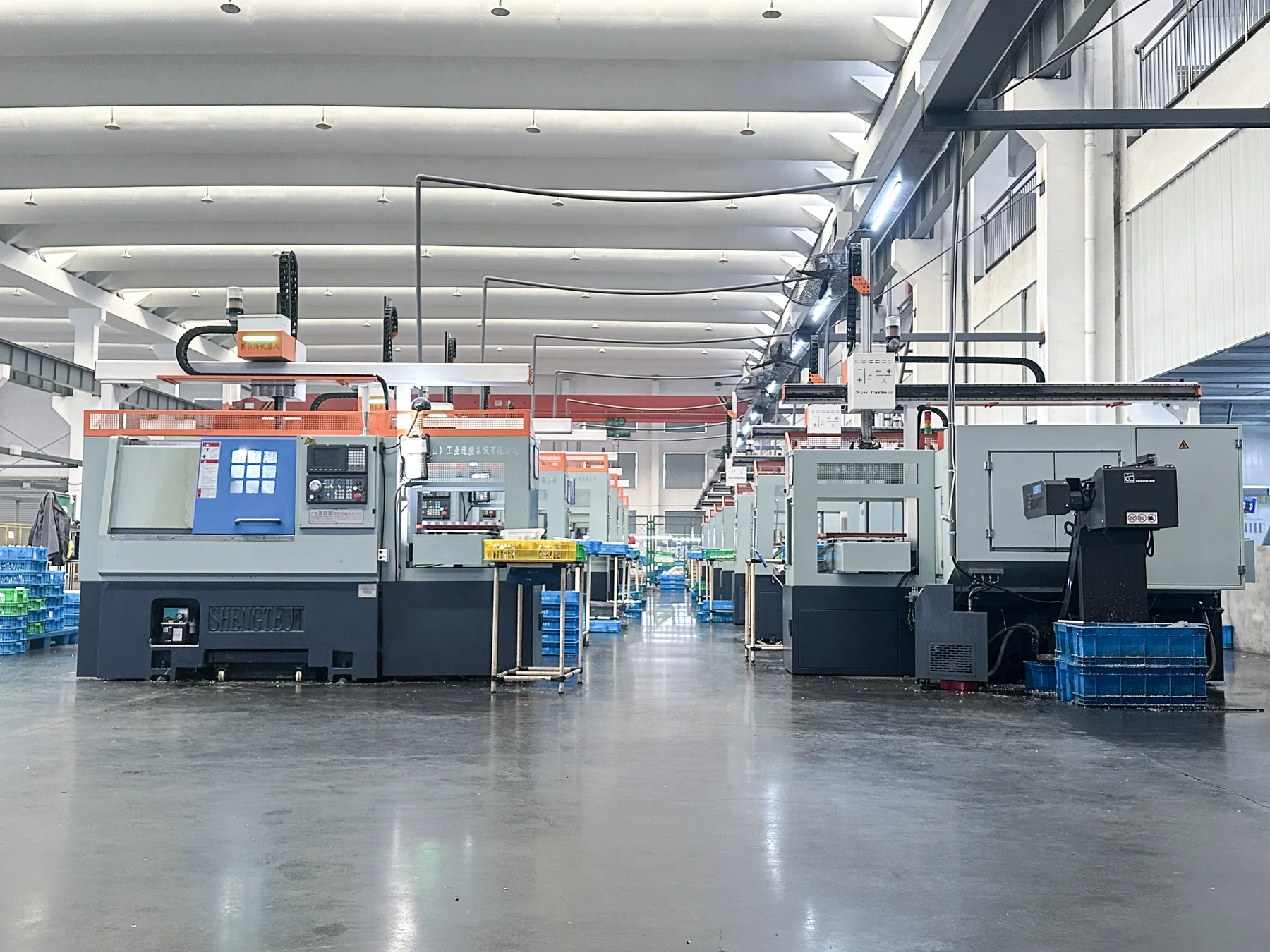
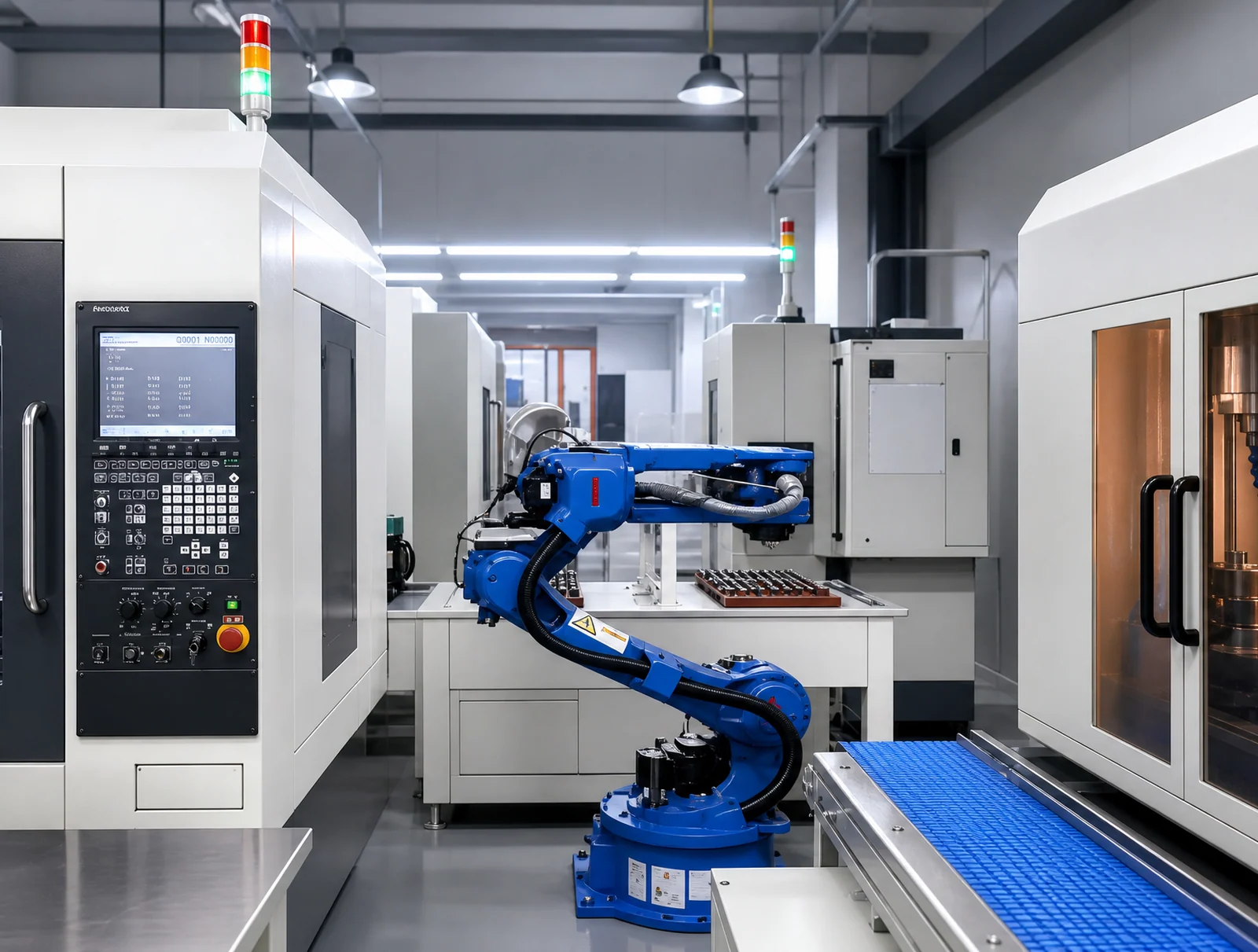
Kunshan New Partner Industrial Connection System Co., Ltd. is a high-tech enterprise founded in 2017 in Kunshan, Jiangsu. Its work is loading and unloading built into the production line: machine compatibility assessment, gripper and clamping design, in-house manufacture of gantry robot and robot tending units, integration of feeding and inspection cells, then on-site installation, commissioning and operator training. What is delivered is a production sequence that runs on its own, not a single machine.
The company covers eleven business lines: automatic CNC lathe loading and unloading, CNC machining center and milling machine automation, drill & tap center loading and unloading, automated part storage and feeding systems, robot and gantry robot machine tending, vision-guided flexible feeding and smart grasping, unmanned inspection workstations, vision inspection and automatic inspection systems, plant-wide automation planning and upgrades, MES and production data management, and machine retrofits and legacy equipment upgrades. Customers are machining manufacturers that need to cut manual loading and unloading, hold clamping repeatable and raise machine utilization, across eight industry directions: automotive components, EV and liquid-cooling parts, bearings and transmission parts, hydraulic and pneumatic parts, precision hardware and fasteners, 3C electronics and precision enclosures, medical devices and precision parts, and bicycle and sports equipment.
The company also operates Dahua (Dongguan) Control Technology Co., Ltd. and a Ningbo office, and is a partner of the multi-joint robot manufacturers ABB · DENSO · ESTUN. Of fifty machine tool brands, the large majority fall on the two main business lines — automatic CNC lathe loading and unloading and CNC machining center automation — and the compatibility points are documented page by machine brand.
Business range at a glance: machine tending, storage and inspection
Sales enquiries: +86 150 5020 2625
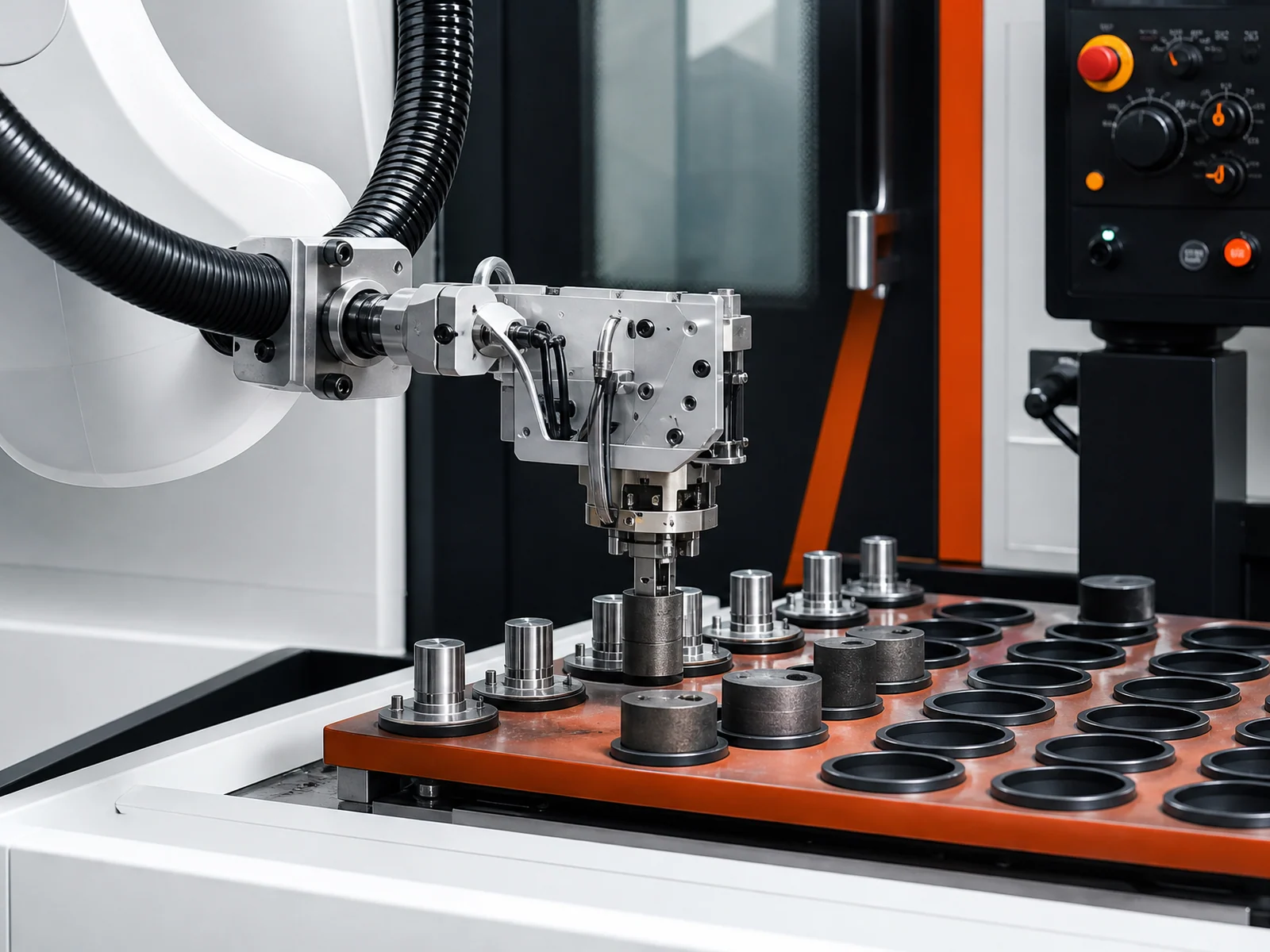
CNC Lathe Loading & Unloading: gantry robots and robotic tending cells
Replace manual lathe loading with a gantry robot or a six-axis robot: one operator per machine becomes one operator per line, and the lathes keep cutting through the unattended hours.
View detailsCNC Machining Center Automation: robotic loading and multi-machine tending
Continuous machining without manual clamping: blank pickup, automatic clamping, multi-face machining and finished-part unloading, joined into one sequence.
View details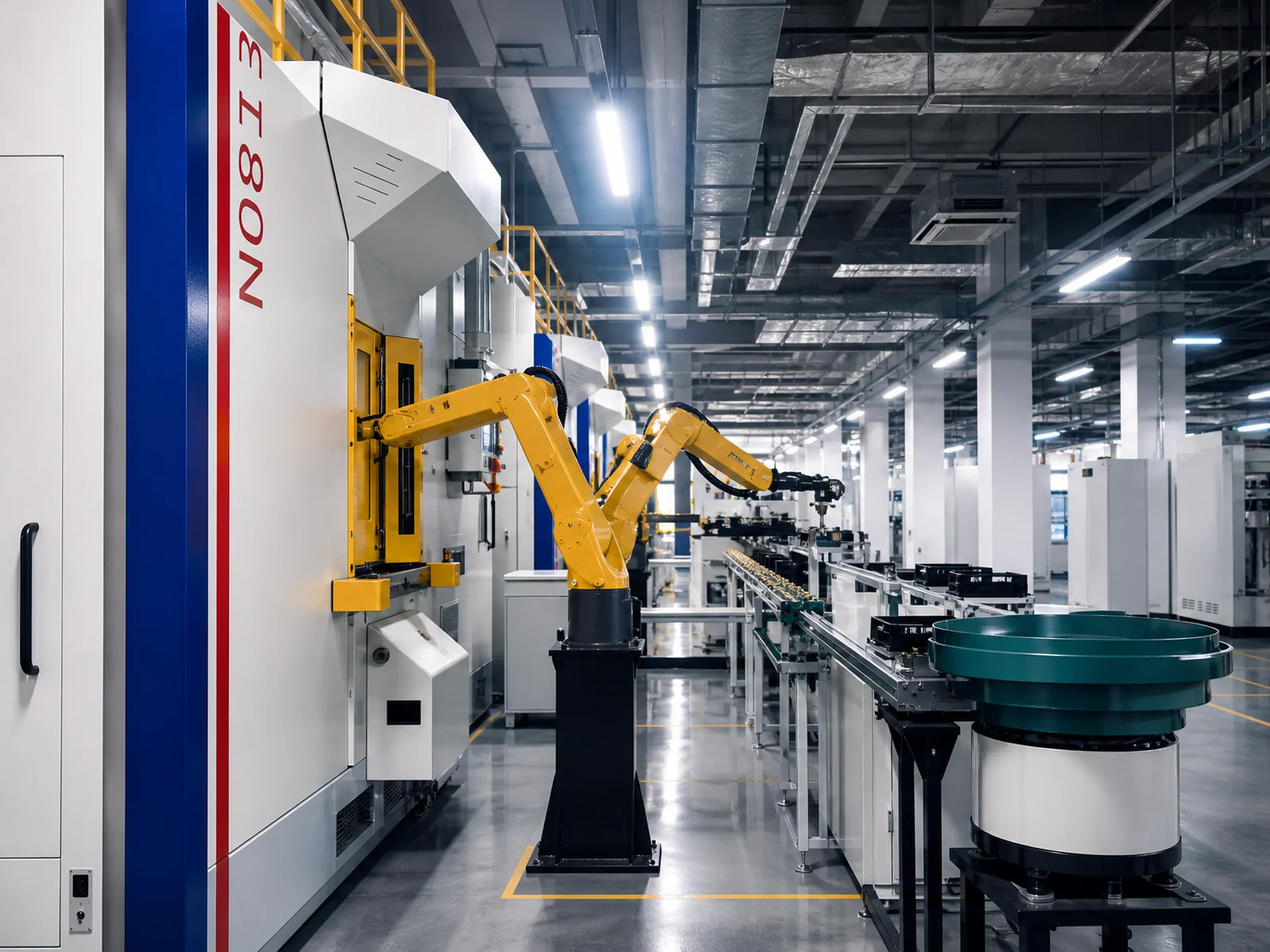
Drill & Tap Center Automation: cycle-time-matched tending units
Short cycles and large batches make drill & tap centers the classic case for one robot serving several machines. The robot takes the repeated load and unload; people refill and inspect.
View details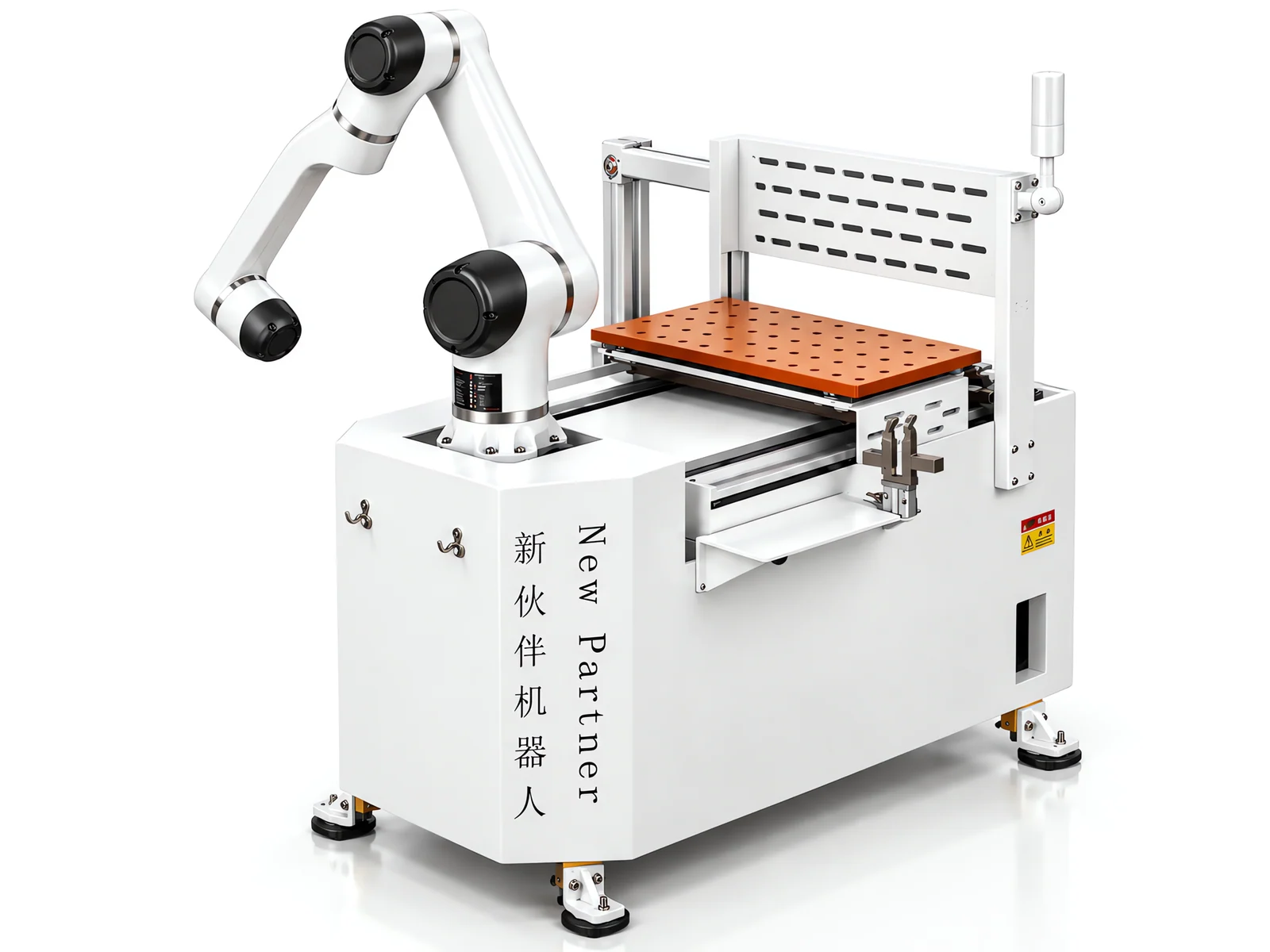
Material Storage & Feeding: part storage and flexible feeding
The bottleneck in automation is usually not the robot but the material. Storage decides how long one refill keeps production running, and whether machine tending really releases labor.
View details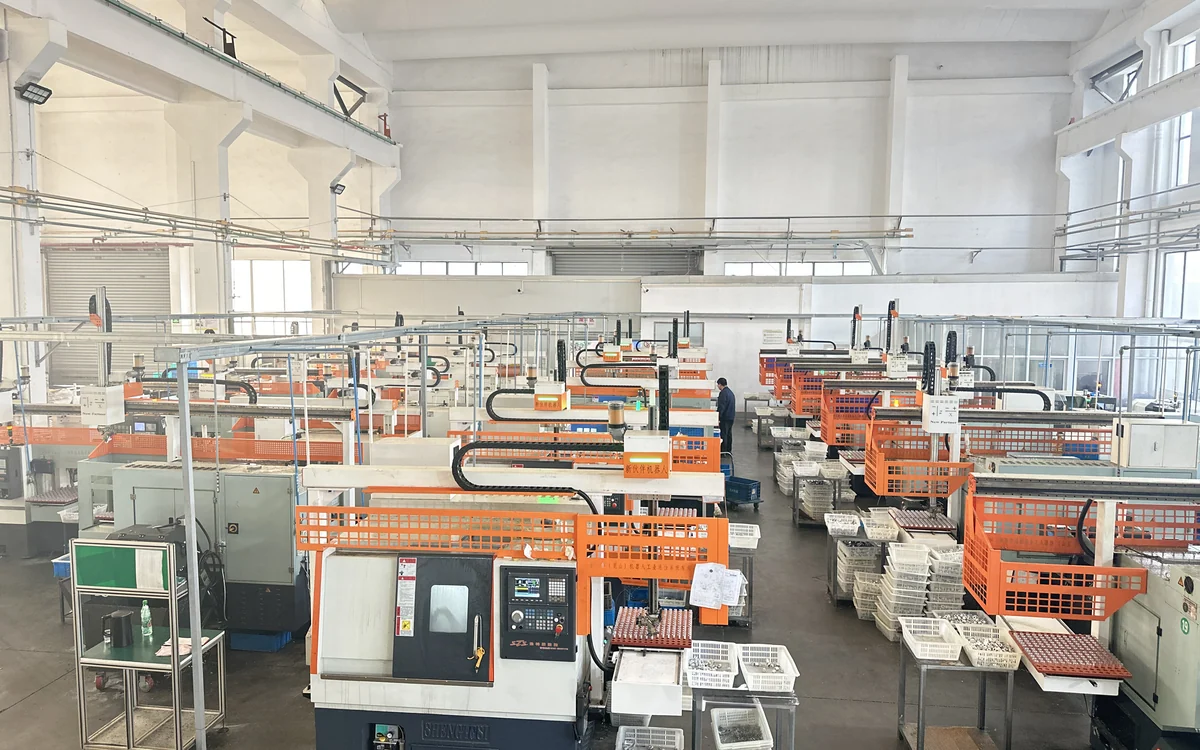
Robot & Gantry Loading: six-axis robots and gantry systems
Two ways to do the same job: robots are flexible and carry more; gantry robots are stable and take up little floor space. Which one fits depends on your machine layout and your parts.
View details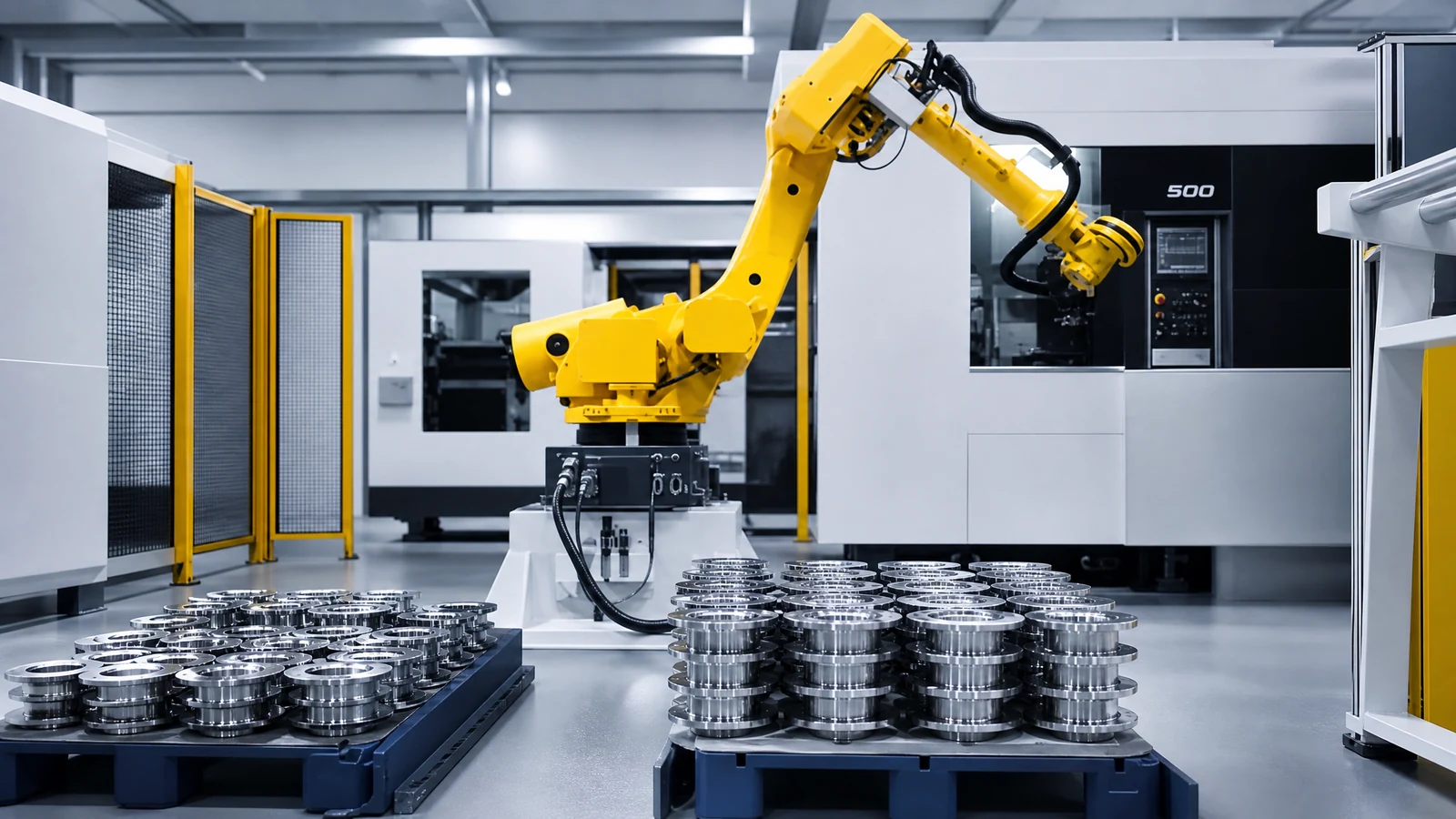
Vision-Guided Flexible Feeding: bin-picking and flexible part feeding
Parts arrive loose in a bin; camera and robot work out position and pose themselves. What disappears is the most labor-intensive operation: straightening every part by hand.
View details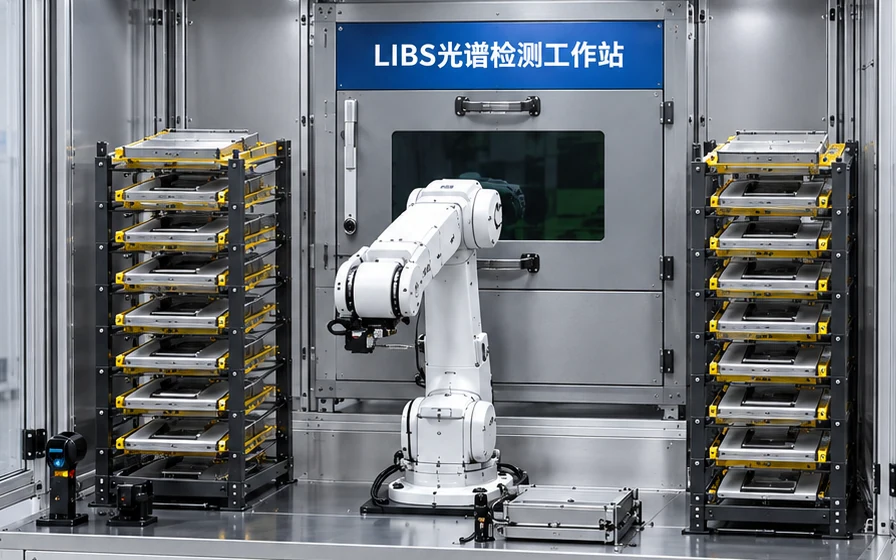
Unmanned Inspection Workstation: in-line dimensional and visual inspection
Load the parts at the end of the shift, read the results at the start of the next one: batch inspection turns from part-by-part work into one night's run.
View details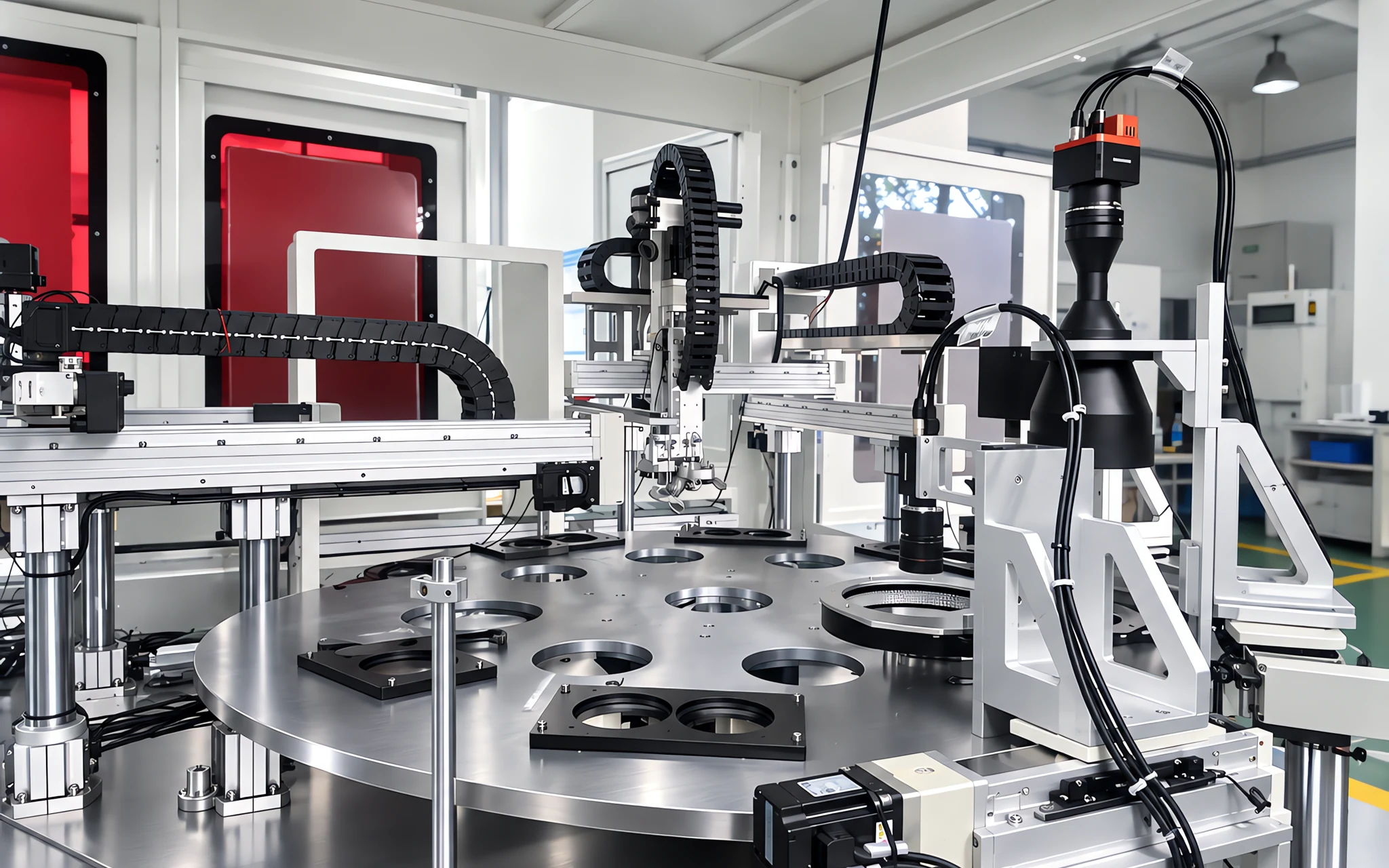
Vision Inspection Systems: defect detection and OK/NG sorting
Inspection moves into the tending cycle: the part is measured as it comes off the machine, so rejects never reach the next operation.
View details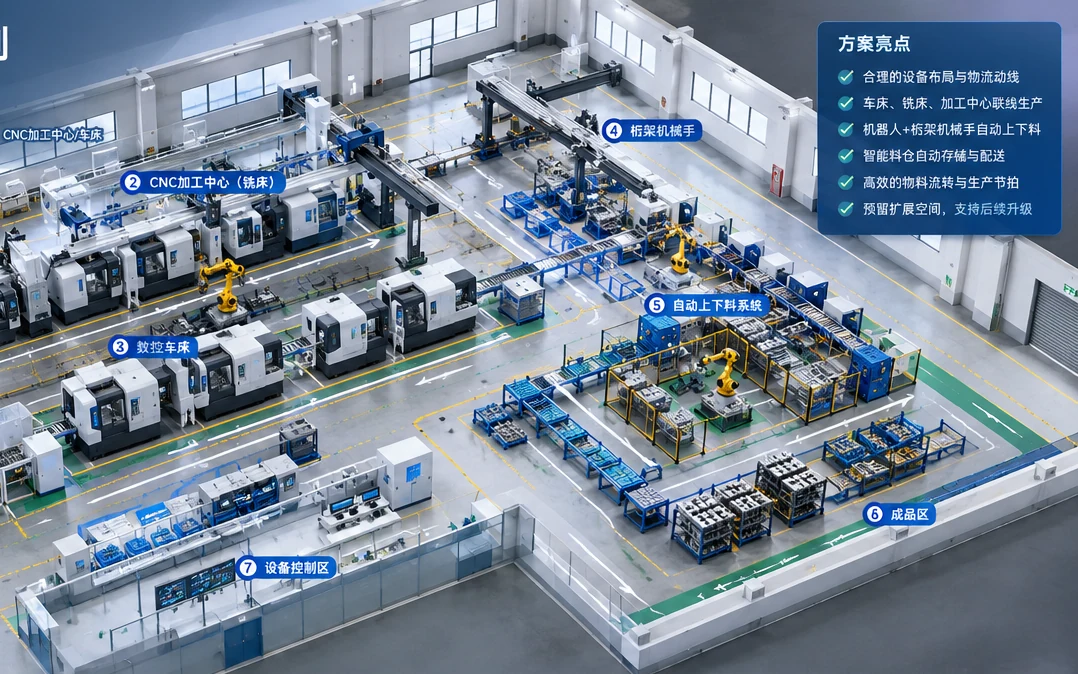
Plant-Wide Automation & Retrofits: line integration and legacy machine upgrades
Not a few robots, but a re-planning of the whole machining shop along three lines: part flow, machine flow and data flow.
View detailsNine steps from assessment to commissioning: machine-fit assessment, cycle-time matching and system integration
Automation succeeds or fails on how assessment, cycle time, gripping, clamping, safety, delivery, feeding, inspection and retrofit fit together — not on a single machine. These nine steps are the fixed sequence we walk through for every project.
Eight-point machine compatibility assessment: structure, door, chuck, turret, window, part, spacing, cycle
Machine structure, door type, chuck, turret position, loading window, part size, machine spacing and cycle time — all eight measured item by item before we judge whether the job can be automated and how.
See the assessment points →Calculate the cycle first, then choose the system: machining time versus tending time
How single-part machining time matches the load and unload motion time decides how many machines one system can serve. If the cycles do not match, adding another machine will not carry the line.
How cycle time is calculated →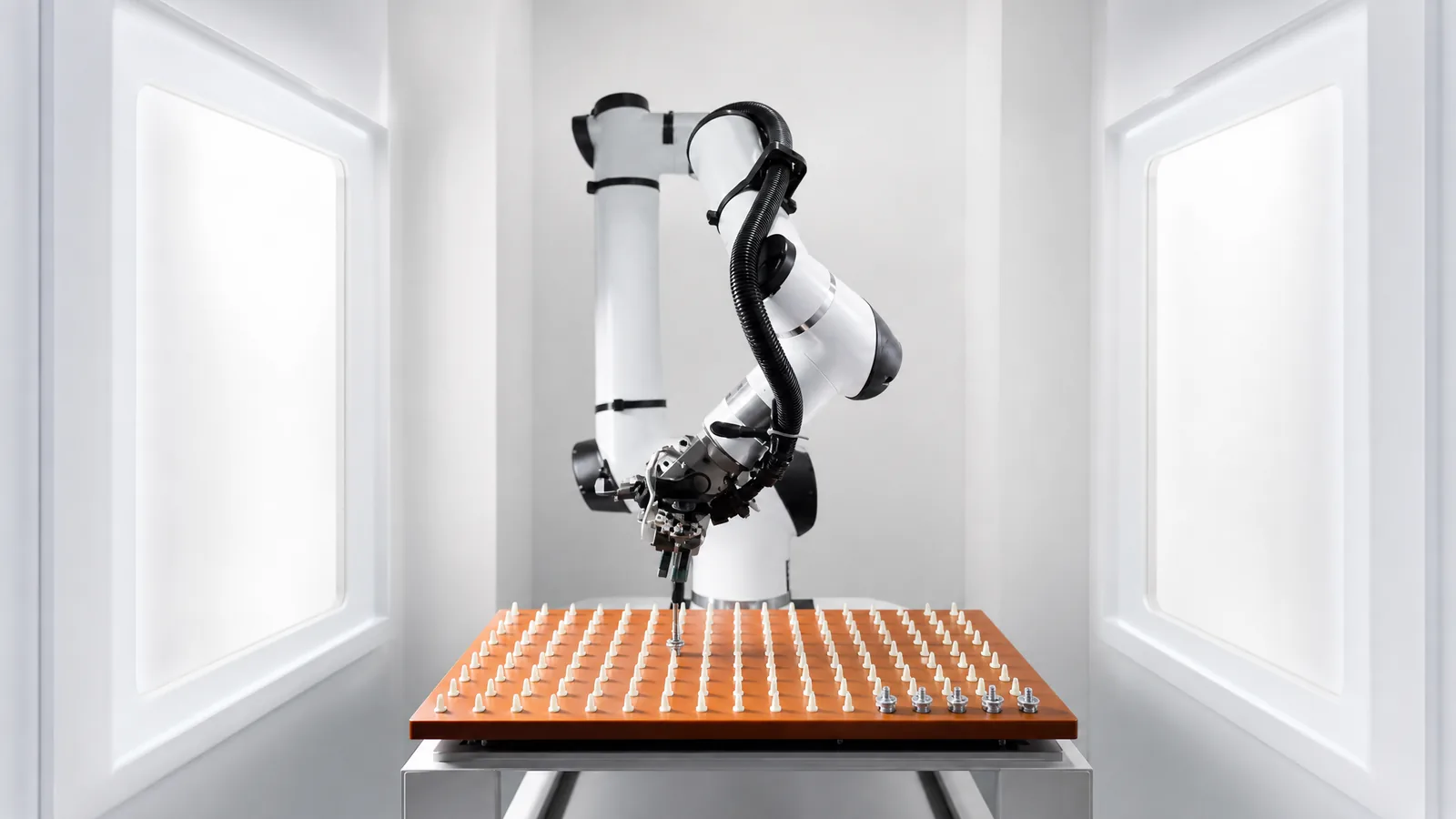
From gripping to repeatable clamping: gripper design and fixture repeatability
Gripper form follows part weight, size, pose and surface condition. Clamping accuracy decides machining consistency — and whether a second locating step is needed.
See the clamping approach →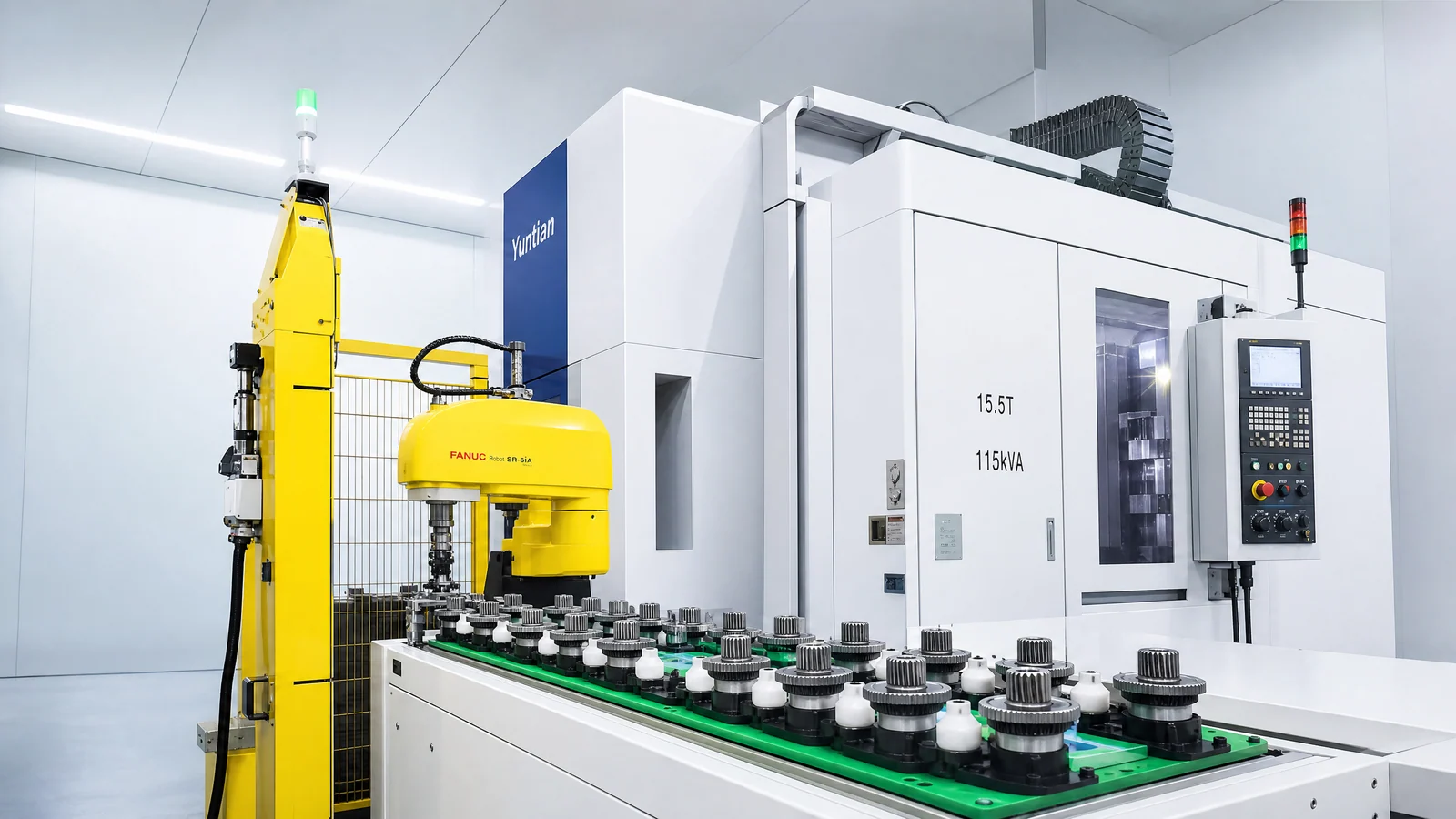
Not sure the part can be gripped repeatably? send a drawing or sample
Send a part for assessment →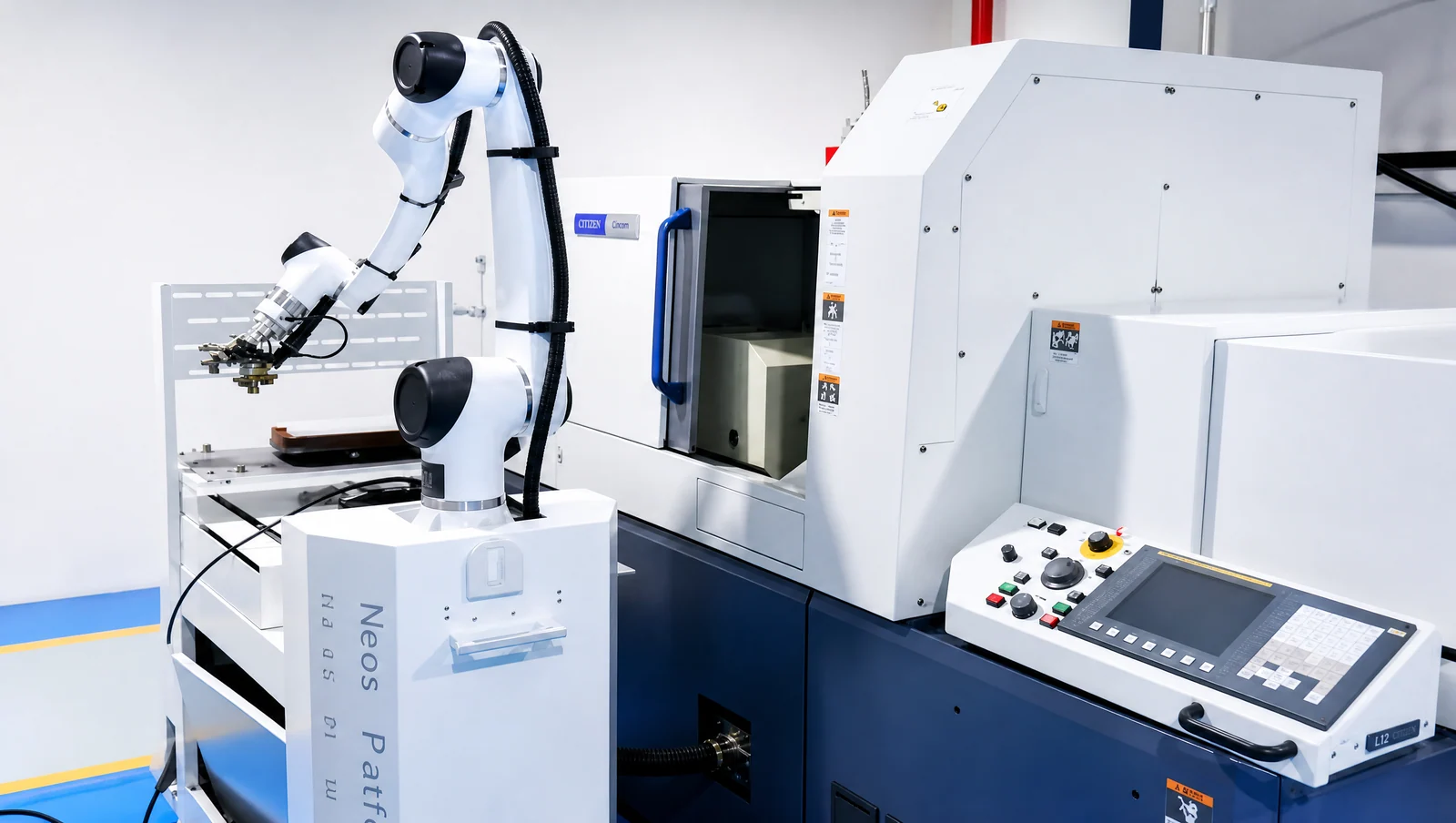
Safety and working alongside the cell: guarding, interlocks and operator zones
Guard door interlocks, a clear split between manual and automatic work areas, emergency stop and status indication. Automation is not about taking people out of the shop, but about not tying them to one machine.
See the safety system →Phased implementation: one machine → cell → linked line
Start with a single-machine pilot and prove gripping, cycle time and operator habits, then build cells, then link the line. The retrofit runs alongside existing production; the shop does not stop.
See the six upgrade levels →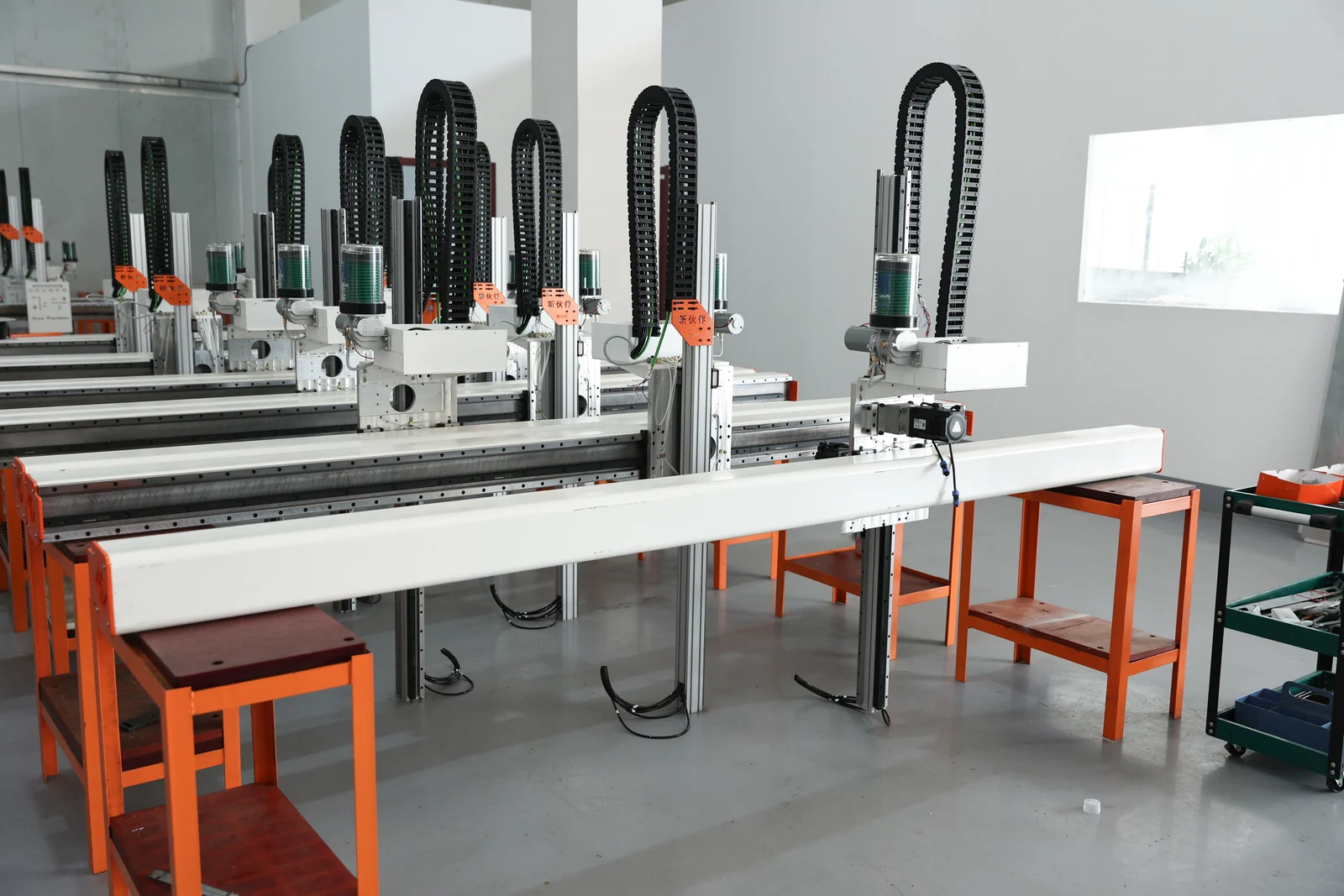
Delivery, commissioning and training: pre-acceptance, on-site start-up and operator training
Pre-acceptance at our works → on-site installation and commissioning → operator and maintenance training. What is delivered is not a machine but a production sequence that runs on its own.
See the service process →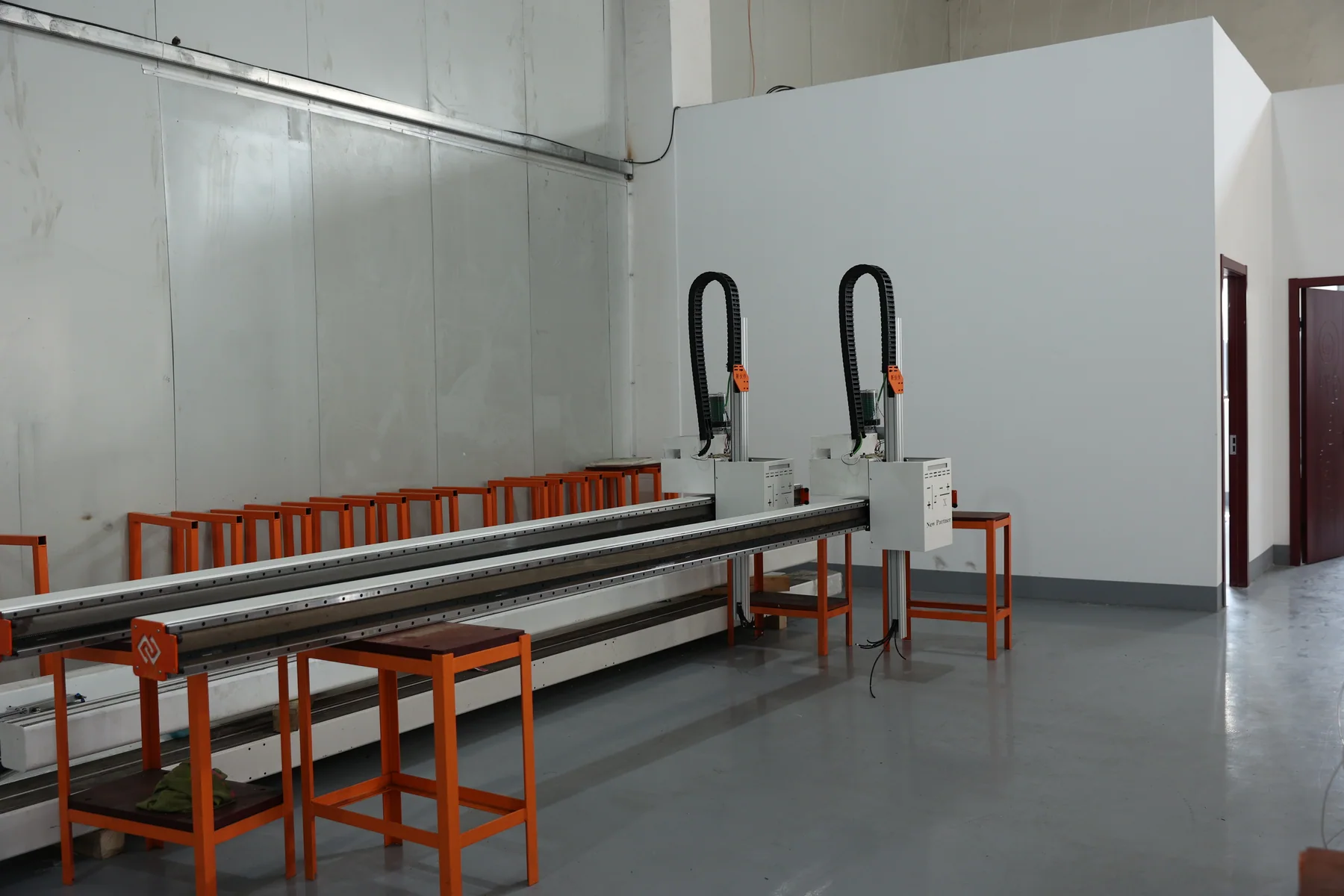
Already know which machine to start with? start with a single-machine pilot
Get a preliminary plan →Vision-guided flexible feeding: the robot finds the part itself, removing manual orientation
Parts arrive loose in a bin; the camera reads position and pose and the robot picks them. That removes the operation that costs the most labor: placing every part the right way up by hand.
See flexible feeding →Inspection inside the tending cycle: in-line judgement and OK/NG sorting
The part is measured as it comes off the machine: dimensions and appearance judged in line, OK / NG sorted automatically, so rejects do not move downstream and the data stays on record.
See in-line inspection →Legacy machine retrofit: automation without replacing the machine, machine retrofit and upgrade
If the door will not open and the signals cannot be read, no handling system will run. An automatic door, automatic chip blowing, chuck and fixture interfaces, and signal wiring and handshake are the preconditions for automation.
See the retrofit scope →Part sizes change often — can feeding keep up?
Talk about feeding options →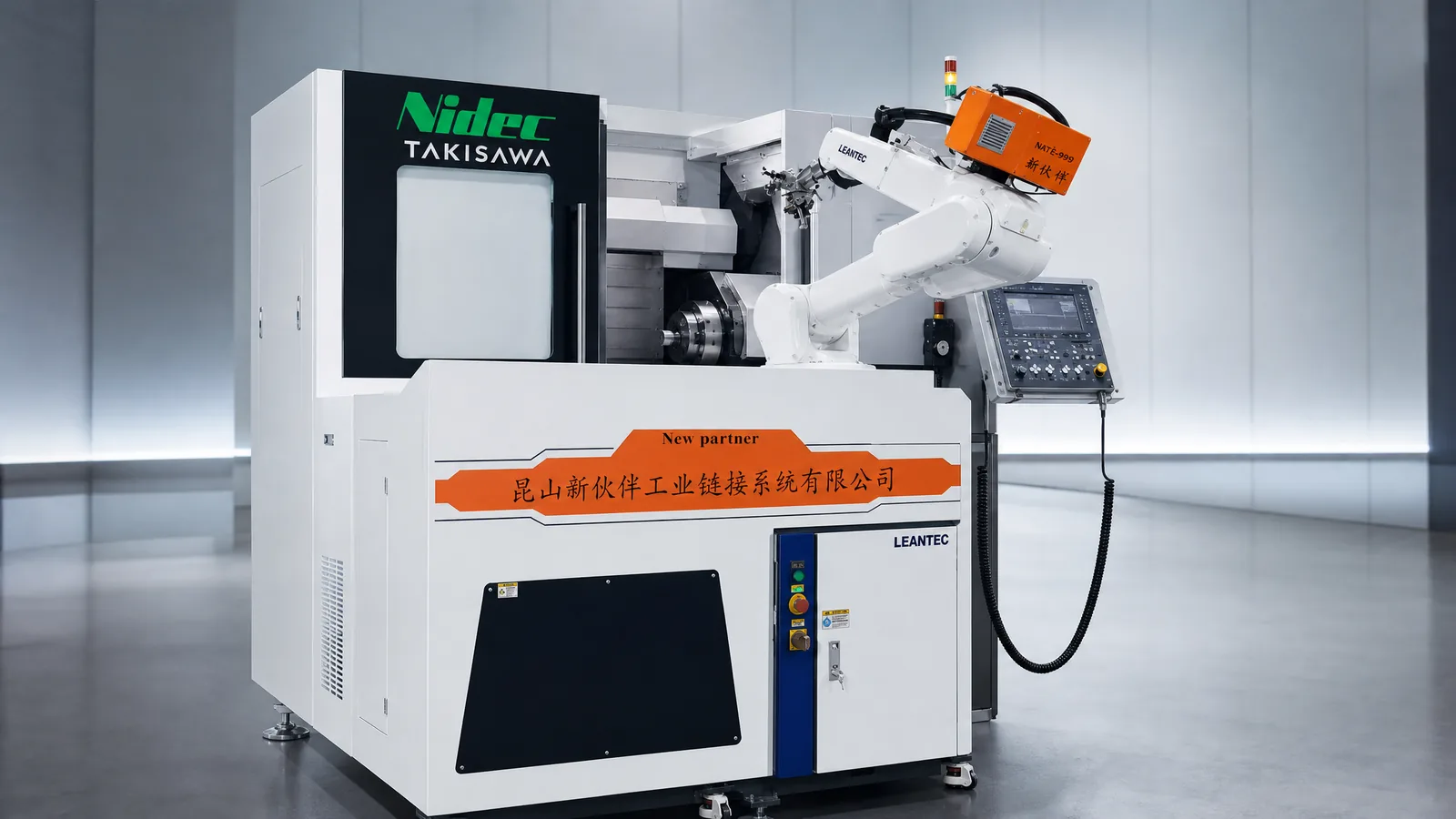
Single Machine Loading: automation for a single CNC lathe
One CNC lathe, machining center, drill & tap center or mill served by one gantry robot or robot cell. The smallest and fastest step to prove an automation project.
View solution details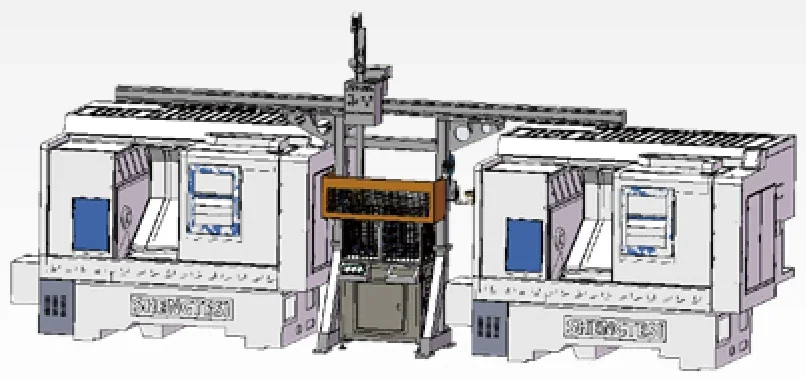
One Robot, Two Machines: one robot serving two machines
One gantry robot or robot cell serving two machines, so the cost per machine drops. Suits two operations run in sequence or two machines running the same operation.
View solution details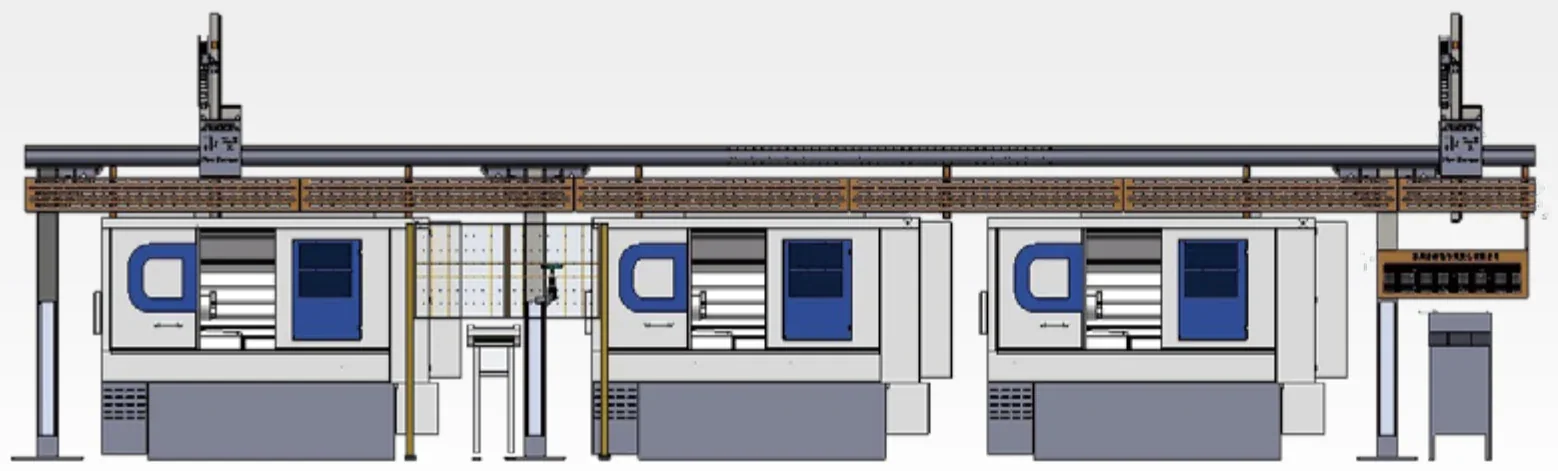
Multi-Machine Tending Line: a connected tending line for several machines
Three machines or more along one line: single- and double-arm gantry systems with X-axis travel up to 7.5 m, served by belt or rotary feeding with central storage.
View solution details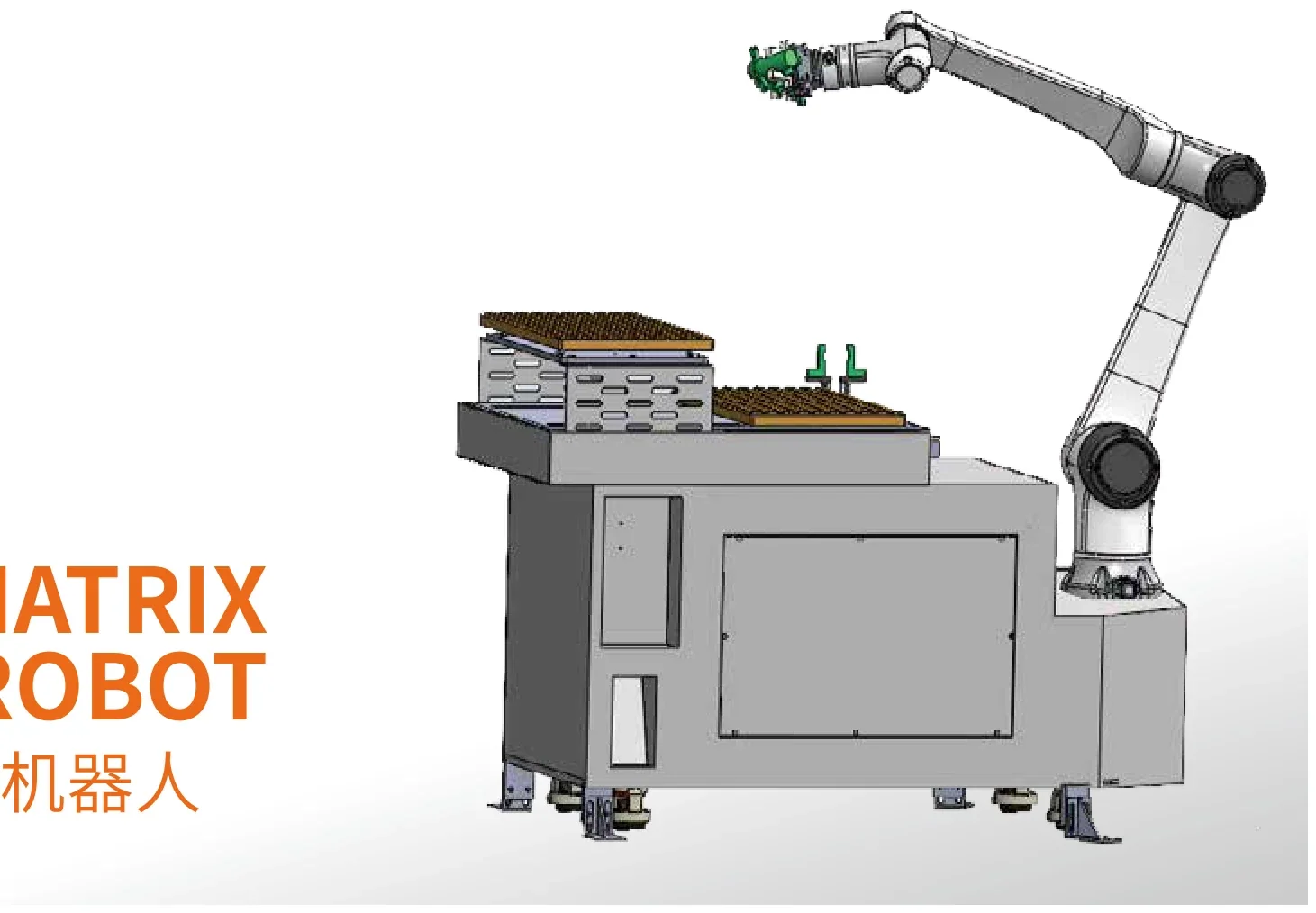
Robot Machine-Tending Cell: six-axis robot cell with safety guarding
A six-axis robot, feeding unit, machine interfaces and guarding assembled into one cell that deploys as a unit — on a single machine, or serving two or three.
View solution details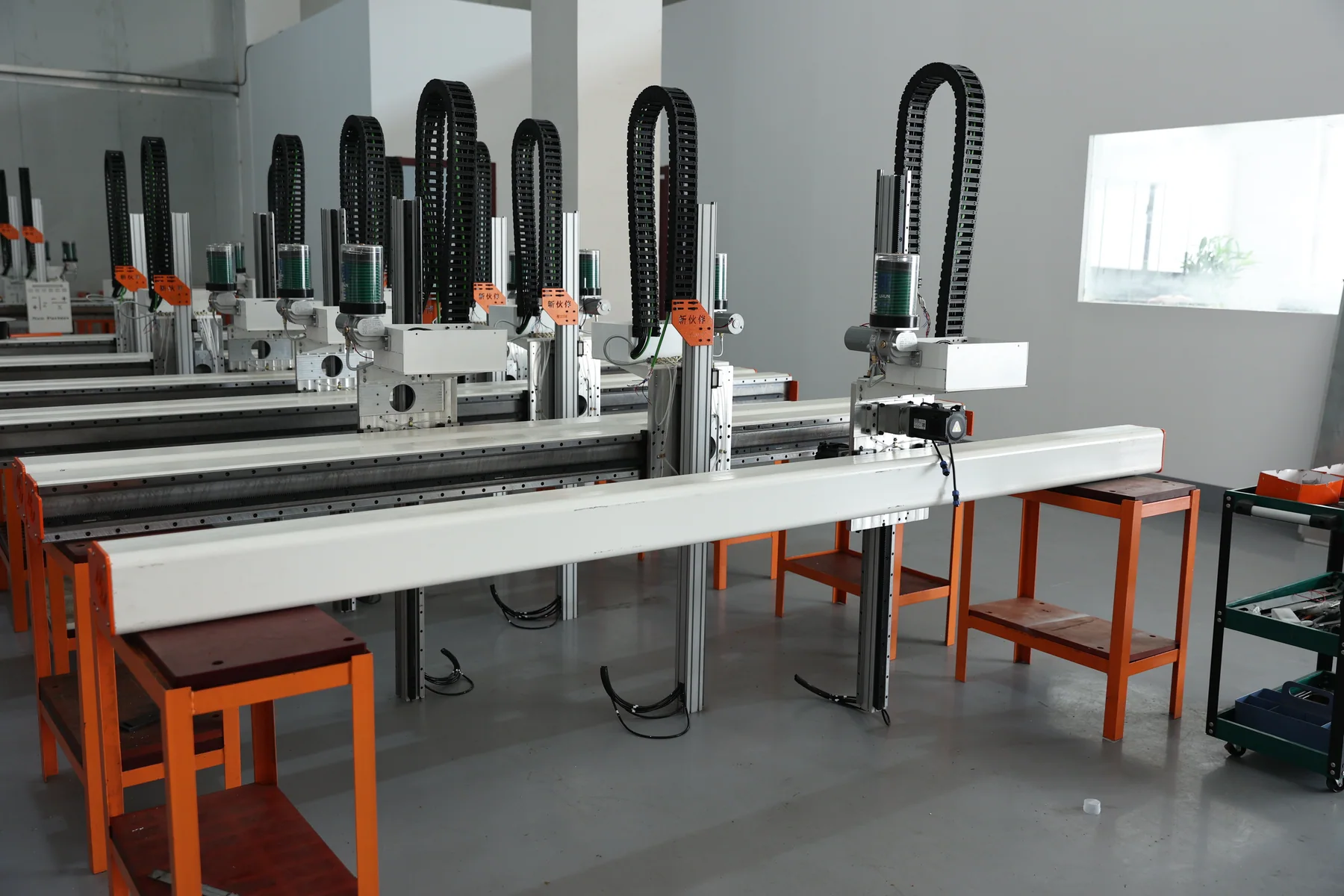
Gantry Loading Cell: gantry tending along the machine line
D-series single-machine, S-series two-machine and multi-machine gantry systems: servo motor, precision rack and pinion and a Shimpo reducer from Japan, with automatic door, chip blowing and lubrication as standard.
View solution details
Storage & Automatic Feeding: part storage, conveying and replenishment
Rotary, stacker, multi-layer and lane magazines plus servo trays and belt conveyors: central refilling and distributed feeding, so one refill carries production further.
View solution details
Vision-Guided Flexible Feeding: bin-picking from bulk containers
Vision reads the position and pose of loose parts and guides the robot to pick them, with a second locating step before the machine. Manual part placing drops out of the process.
View solution details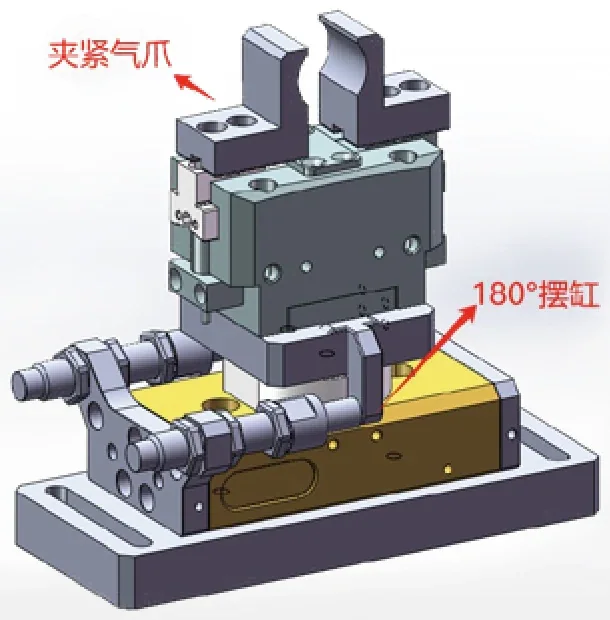
Auto Flip & Second-Op Clamping: multi-face machining and op-to-op handling
A flip station (air gripper, rotary cylinder, control valve) plus zero-point interfaces for second-operation and multi-face machining, without manual re-clamping.
View solution details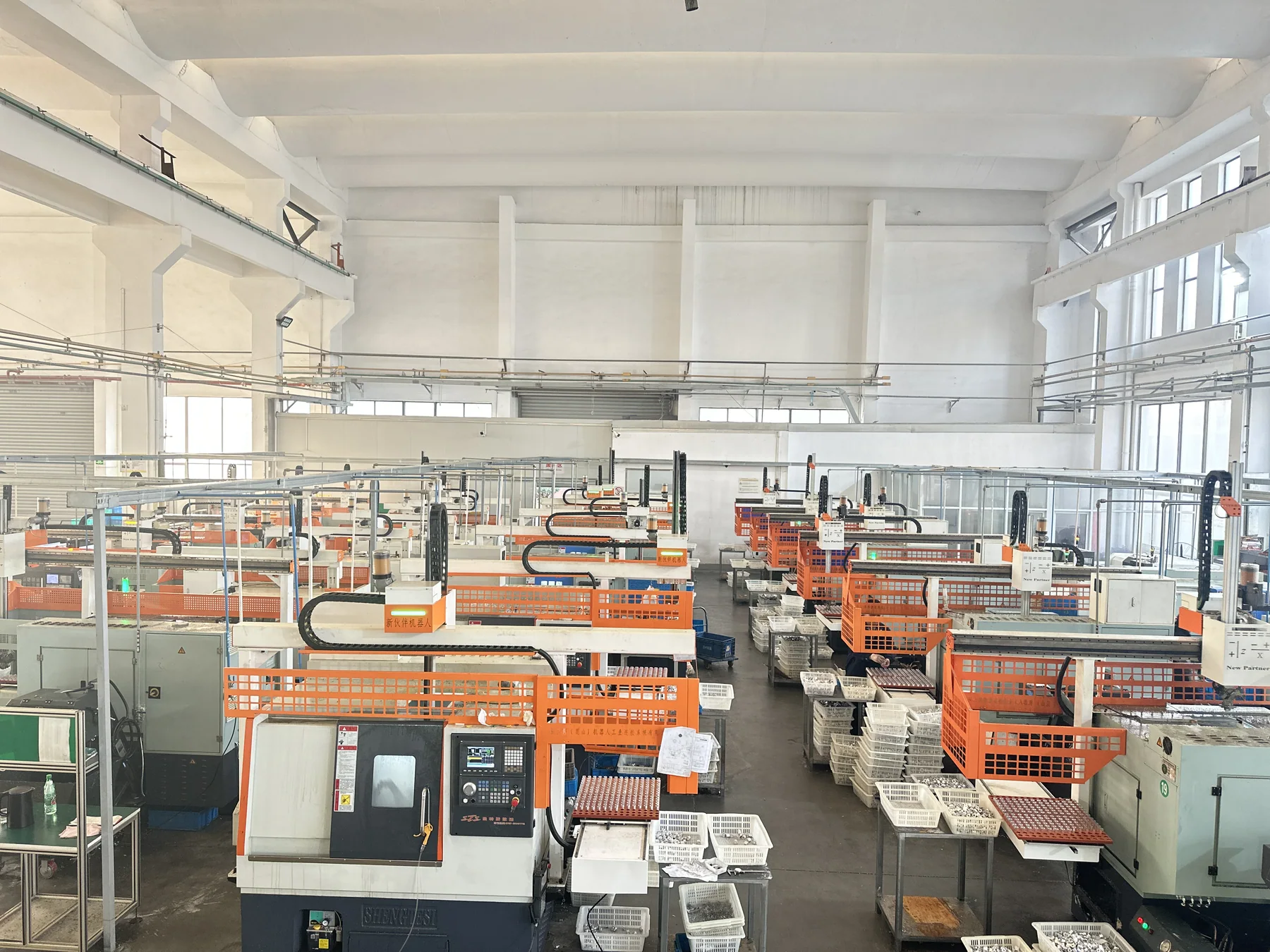
In-Line Post-Machining Inspection: dimensional and visual verification in line
Vision or electronic plug gauges added inside the tending cycle: dimensions and appearance judged in line, OK / NG sorted automatically, inspection data kept for traceability.
View solution details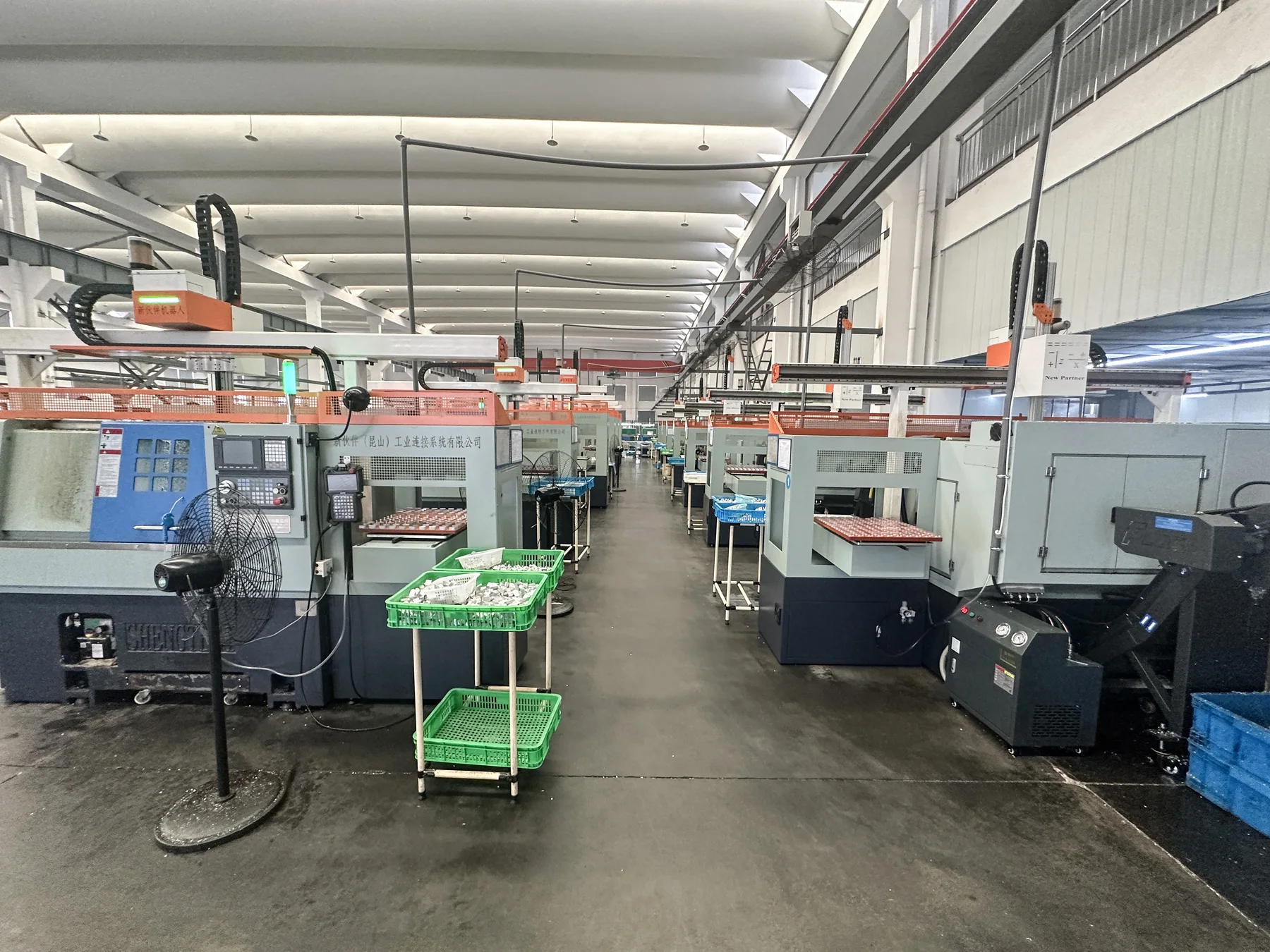
Plant-Wide Automation Upgrade: line planning and machine connectivity
Process review, machine compatibility assessment, logistics and buffer planning, then phased automation cells and MES data integration — running alongside existing production.
View solution detailsWhere automation lands, industry by industry: automotive, EV liquid-cooling, bearings, hardware and 3C parts
Workpiece shapes, batch sizes and quality requirements differ by industry, so the entry point for automation differs too. Below are six of the eight industry directions; the rest are on the industry overview.
Automotive Components: engine and chassis parts tending
Large batches, tight cycles and high consistency requirements: automotive parts are one of the areas where the gains from automation are most direct.
View scenario →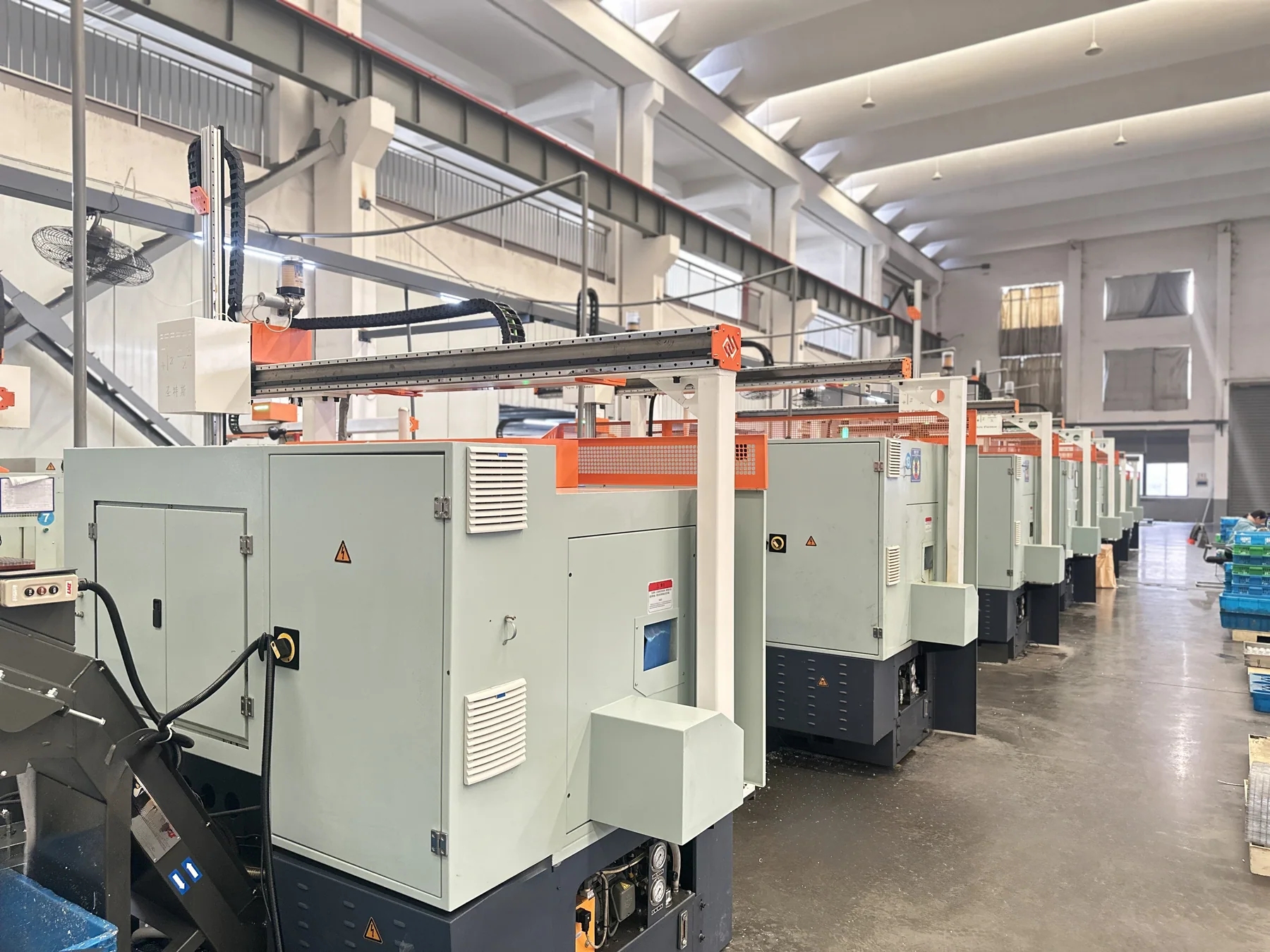
EV & Liquid-Cooling Parts: battery pack and cooling connector machining
For parts such as liquid-cooling connectors and motor end caps, automation shows its advantage as soon as batch sizes come up.
View scenario →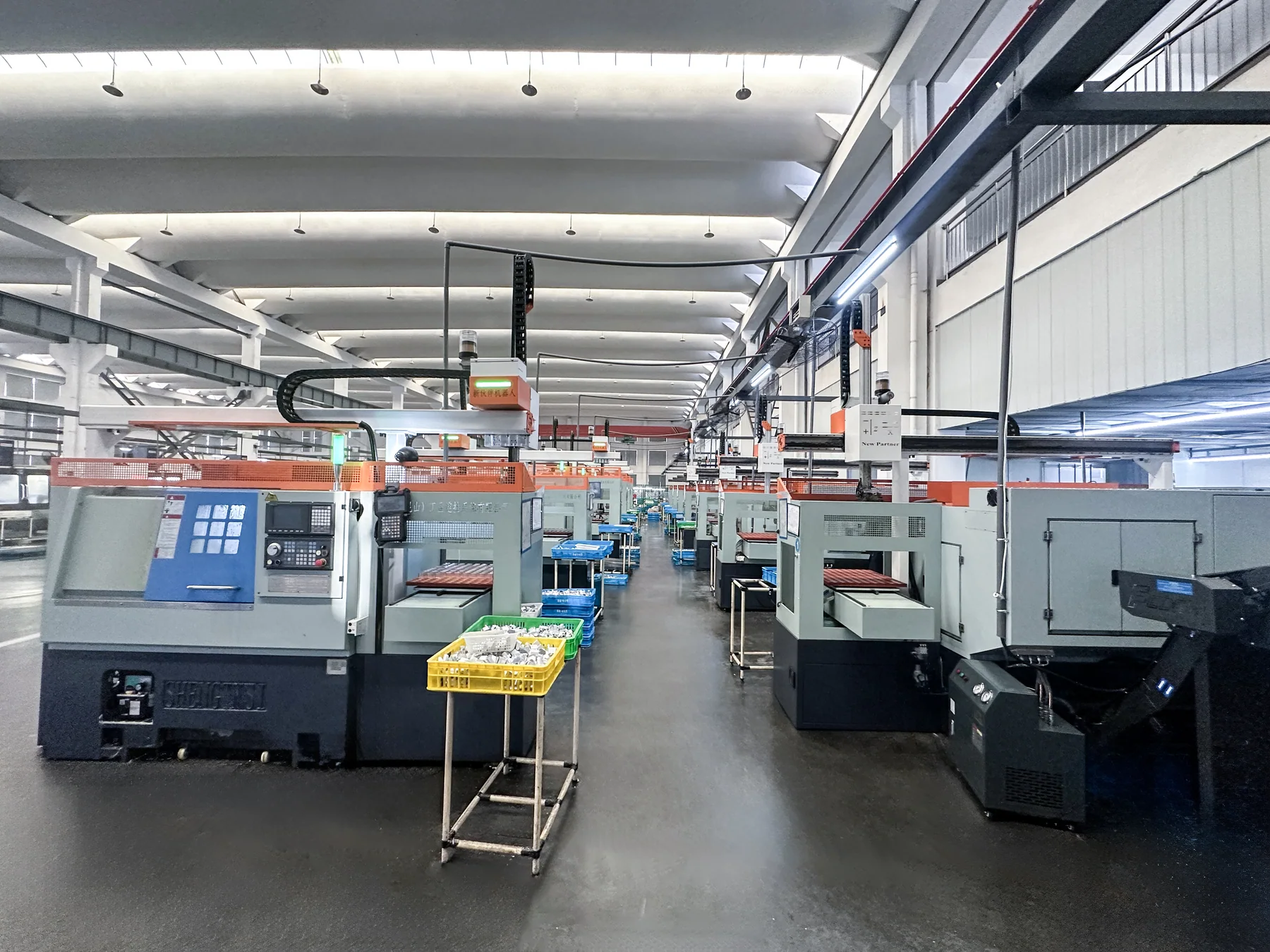
Bearings & Transmission: rings and wheel-hub bearing tending
Ring and disc parts are regular in shape and run in large batches — one of the best fits for robot machine tending.
View scenario →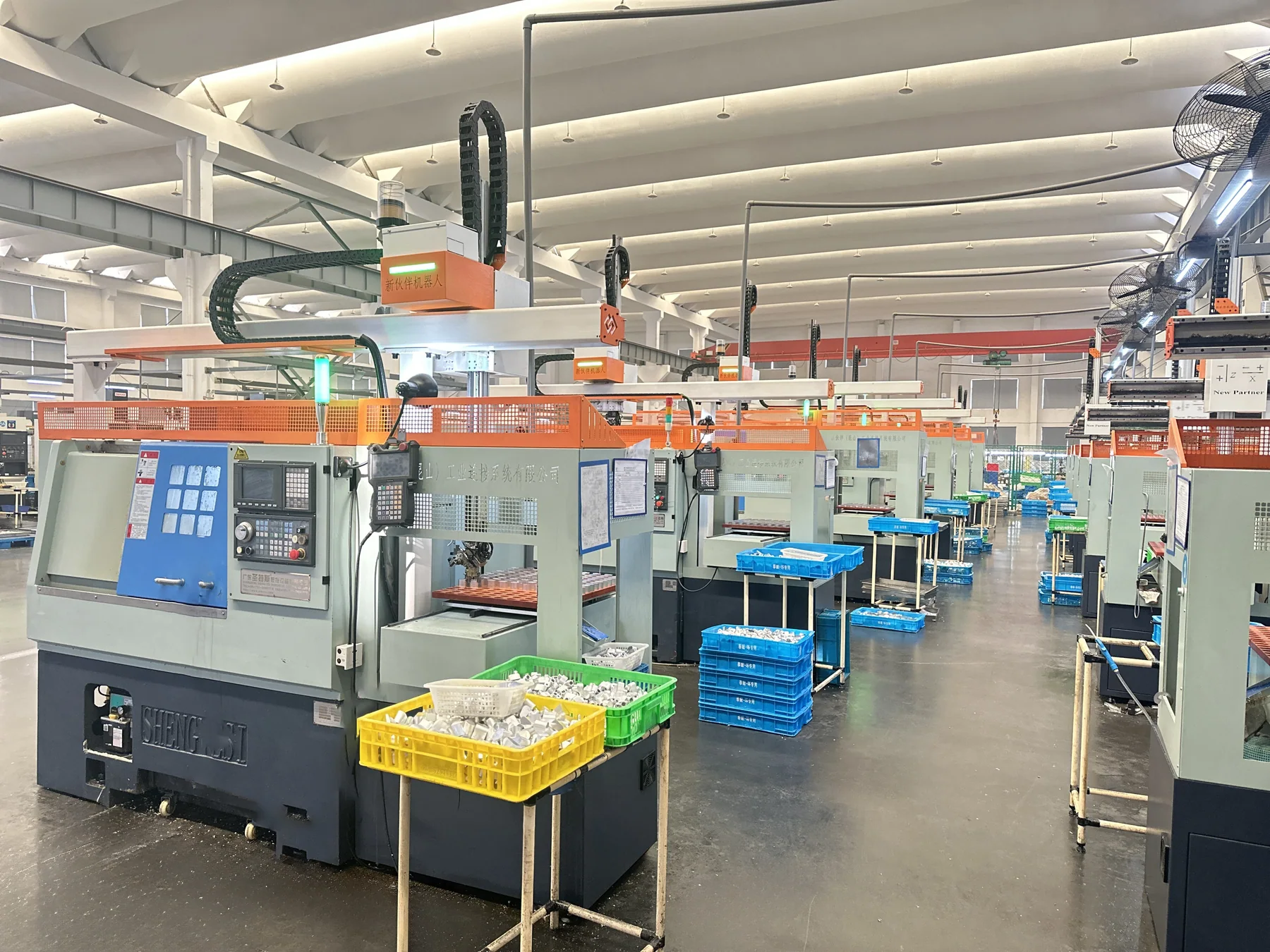
Precision Hardware & Fasteners: high-volume small-part automation
Small parts, tight tolerances, large batches: the positioning accuracy of a servo tray is exactly what this kind of work needs.
View scenario →Electronics & Precision Enclosures: precision enclosure tending and inspection
Drill & tap centers run short cycles and stand in rows; one-to-two and one-to-three cells are the standard answer on these lines.
View scenario →Medical & Implant Parts: medical part robotic tending
Expensive material, high precision, moderate batches: the value of automation here is consistency and a traceable process.
View scenario →Real installations, filed by business line: gantry robot and robotic machine-tending references
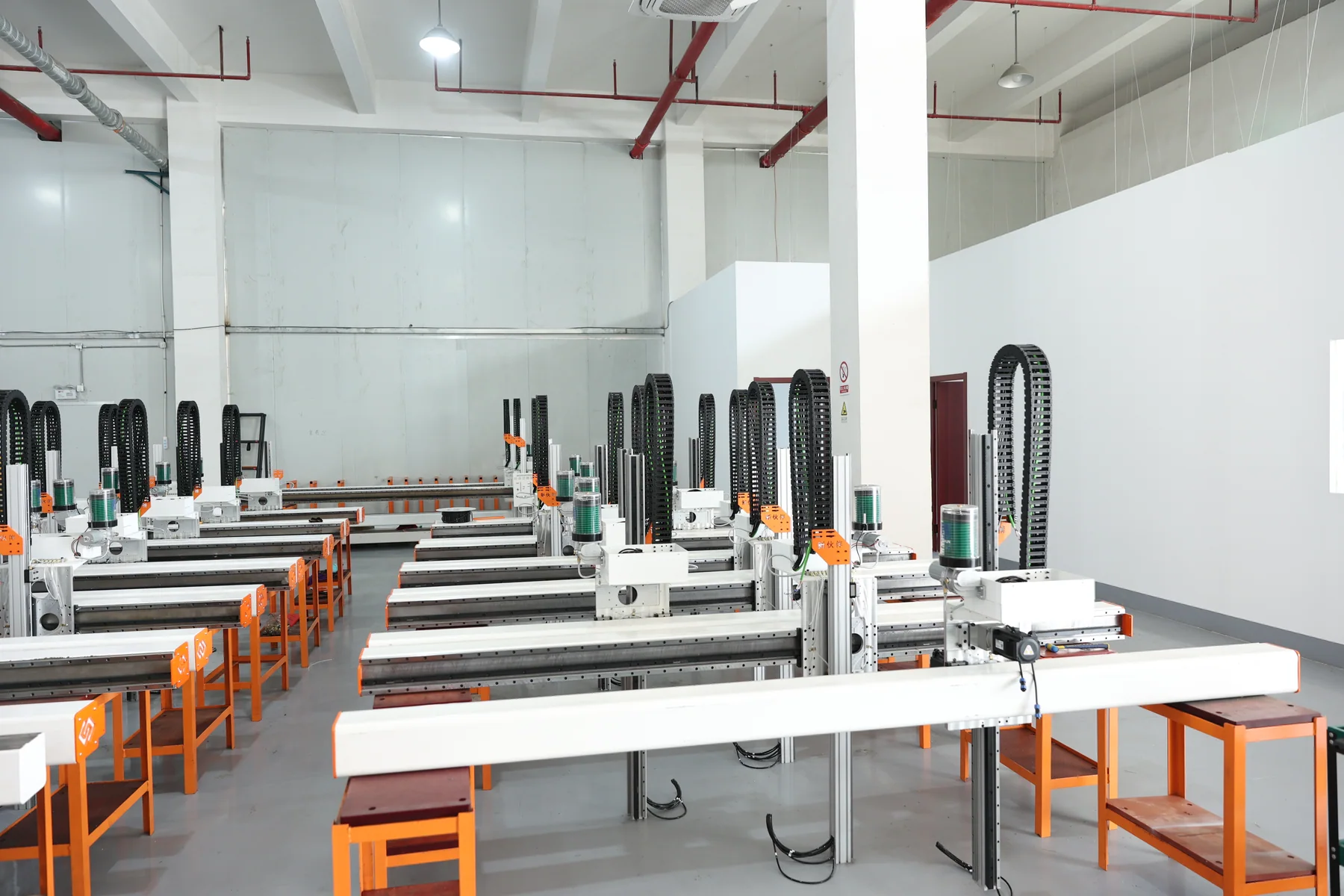
The photos below come from our gantry robot assembly shop and from customers' machining shops. The case library works to a strict admission rule: no customer name is published without written authorization, and cycle times, capacity or payback figures without measurement are not stated.
CNC lathe loading and unloading: gantry robots and robotic tending cells
Shop-floor photo of the installation and line layout; see the case studies for details.
View detailsCNC machining center and milling machine automation: robotic loading and multi-machine tending
Shop-floor photo of the installation and line layout; see the case studies for details.
View detailsDrill & tap center loading and unloading: cycle-time-matched tending units
Shop-floor photo of the installation and line layout; see the case studies for details.
View details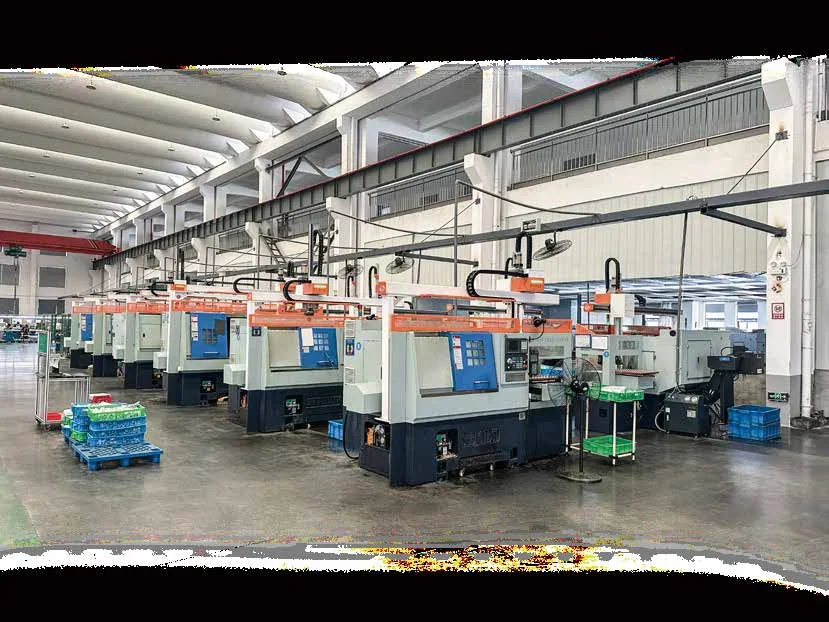
Material storage and automatic feeding: part storage, sorting and flexible feeding
Shop-floor photo of the installation and line layout; see the case studies for details.
View detailsRobot and gantry robot loading: six-axis robots and gantry tending systems
Shop-floor photo of the installation and line layout; see the case studies for details.
View detailsVision inspection and automatic inspection: in-line defect detection and part sorting
Shop-floor photo of the installation and line layout; see the case studies for details.
View detailsKnowledge topics across 9 business lines: machine tending selection, sizing and retrofit know-how
Every business line has its own topics: definition, sequence, selection, clamping, feeding, inspection and common questions, all sitting in sections of the matching page.
Applications: machining and automation for 50 workpiece types · Open the knowledge hub →
From loading one machine to automating a whole shop: a phased plant-wide automation roadmap
How New Partner builds loading and unloading into the line: real production-line integration
Ten solution pages, organized by machine count and process step: tending cells and line configurations
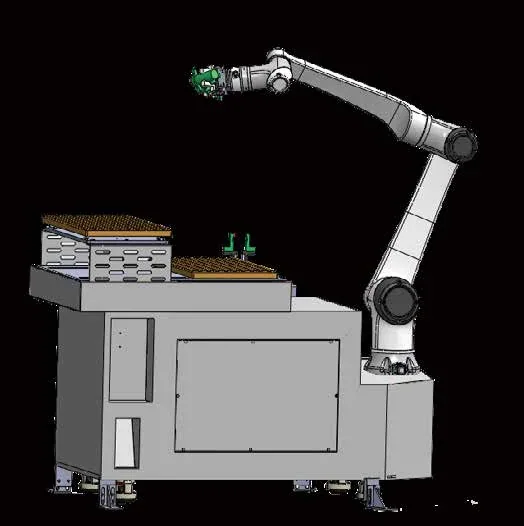
Gantry D / S series, the XHB storage robot and function units: gantry robots and storage robot range
Where automation lands across eight industry directions: automotive, bearings, hydraulics and 3C
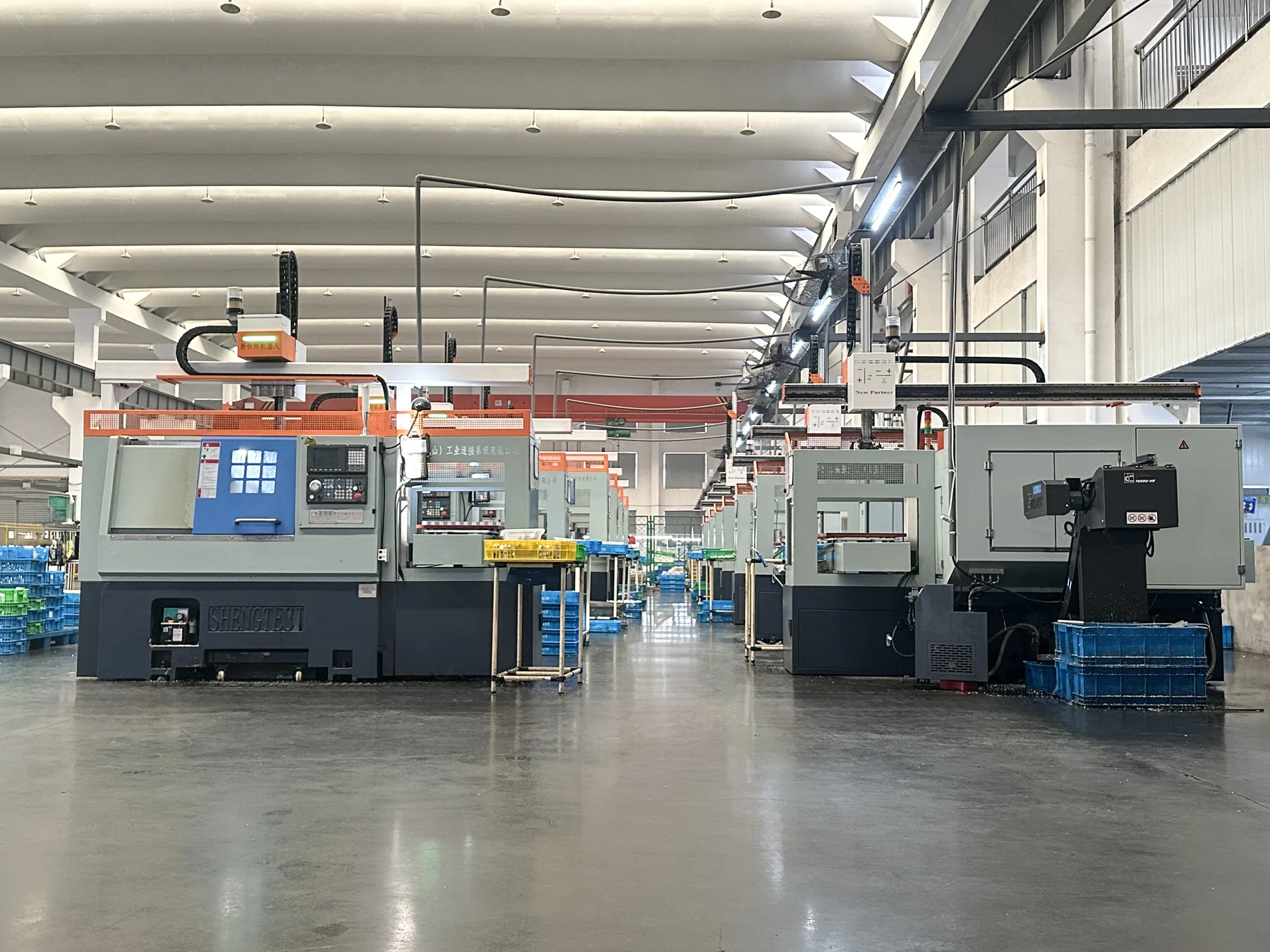
Structure / door / chuck / turret / window / part / spacing / cycle time: the eight machine-fit dimensions
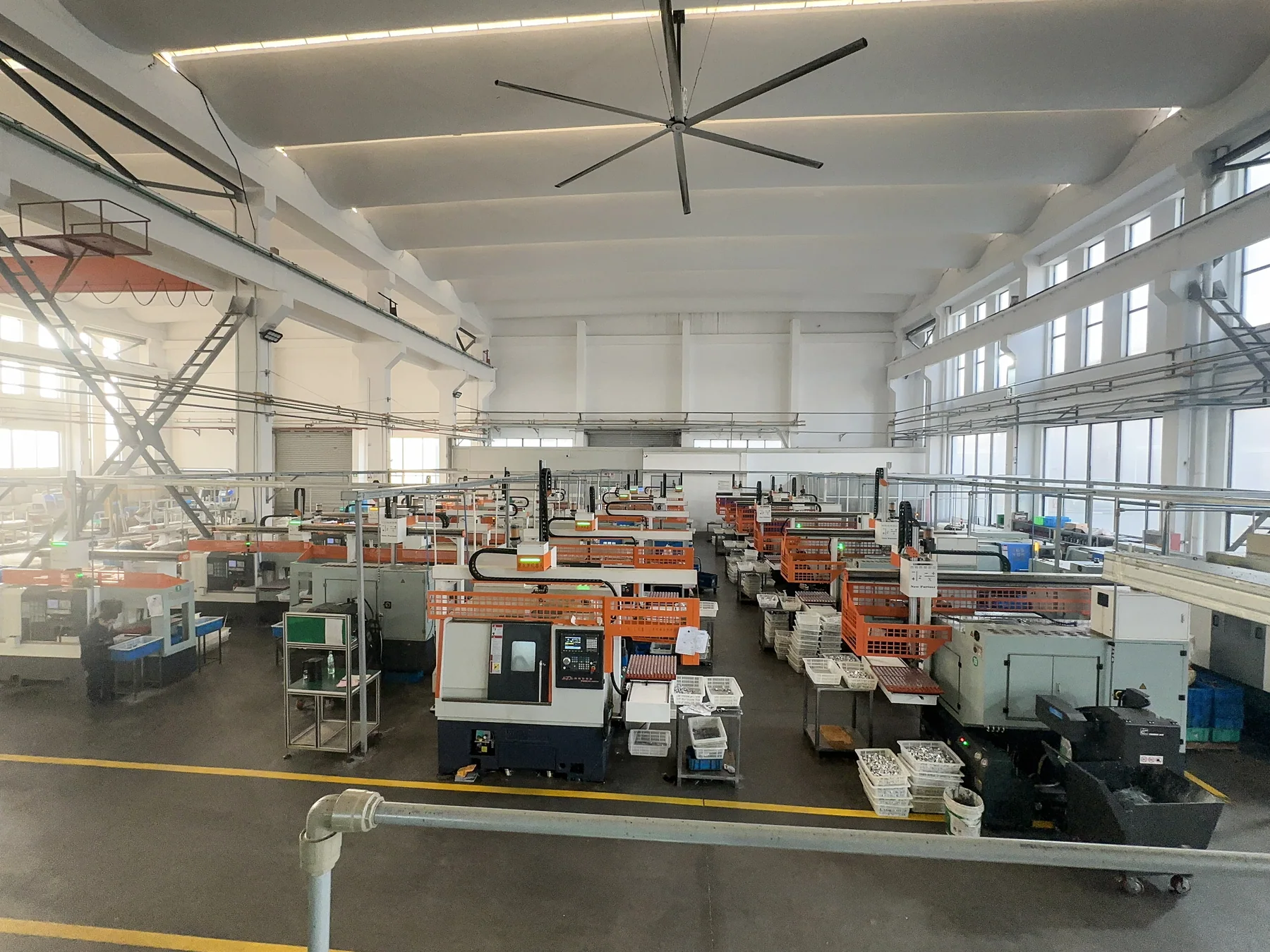
Automation landing pages for 50 machine tool brands: brand-specific machine tending pages
Photos from our gantry assembly shop and from customers' machining shops: tending installations on site
Send part and machine details for a feasibility assessment: workpiece, machine and capacity checklist
We start from the customer's actual process and treat machine compatibility assessment, in-house manufacture of gantry and robot tending units, integration of feeding and inspection cells, and on-site installation and commissioning as one job — delivering a production sequence that runs on its own.
Service line +86 150 5020 2625
What does New Partner do?
Founded in 2017 in Kunshan, Jiangsu, New Partner designs, builds and commissions automated loading and unloading systems for CNC lathes and machining centers, including gantry robot systems, automated part storage and feeding, and in-line inspection. Partner of ABB, DENSO and ESTUN robot manufacturers.
Robot or gantry robot — how do I choose?
The two forms trade off differently. A six-axis robot is flexible and carries more, so it suits heavier parts, complex poses, or jobs that also need flipping and inspection. A gantry robot is stable and takes up little floor space, so it suits covering several machines along the machine row. Which one fits depends on machine layout, part weight and cycle time.
How many machines can one system serve?
It depends on how well the cycles match: single-part machining time against the load and unload motion time decides how many machines one system can serve. Gantry robots run X-axis travel of 2.4 – 7.5 m, covering a single machine, two machines, or lines of three and more. We calculate the cycle at the proposal stage, then fix the model and the layout.
Can an older machine be retrofitted for automation?
It depends on the machine structure and its signal conditions: an automatic door, automatic chip blowing, chuck and fixture interfaces, and signal wiring and handshake are the preconditions for automation. We assess eight points — structure, door, chuck, turret, loading window, part, machine spacing and cycle time — before deciding what is possible.
Does production have to stop during the retrofit?
Not for the whole shop. We recommend a phased approach: a single-machine pilot first, to prove gripping, cycle time and operator habits, then cells, then a linked line. The retrofit runs alongside existing production.
What do we need to send to start a project?
Ideally the part drawing or photos, the machine make and model with photos of the structure, current daily output and staffing, the operation split and the single-part machining time. From that we produce a preliminary proposal covering the compatibility assessment, the system scope and an implementation recommendation. The assessment is free of charge.
More questions are answered in the FAQ blocks on each business line and solution page. You can also send your part and machine details, or call +86 150 5020 2625.
Send us your workpiece and machine details for a feasibility assessment
Share drawings or photos of the part, the machine make and model, your current daily output and how many operators run it. We reply with a feasibility assessment, the system concept and an implementation recommendation. The assessment is free of charge.