Battery Structural Part Machining Automation | New Partner
Battery structural parts in aluminum: face and contour milling, hole patterns, machining centers with bin or magazine feeding, burr and appearance checks.
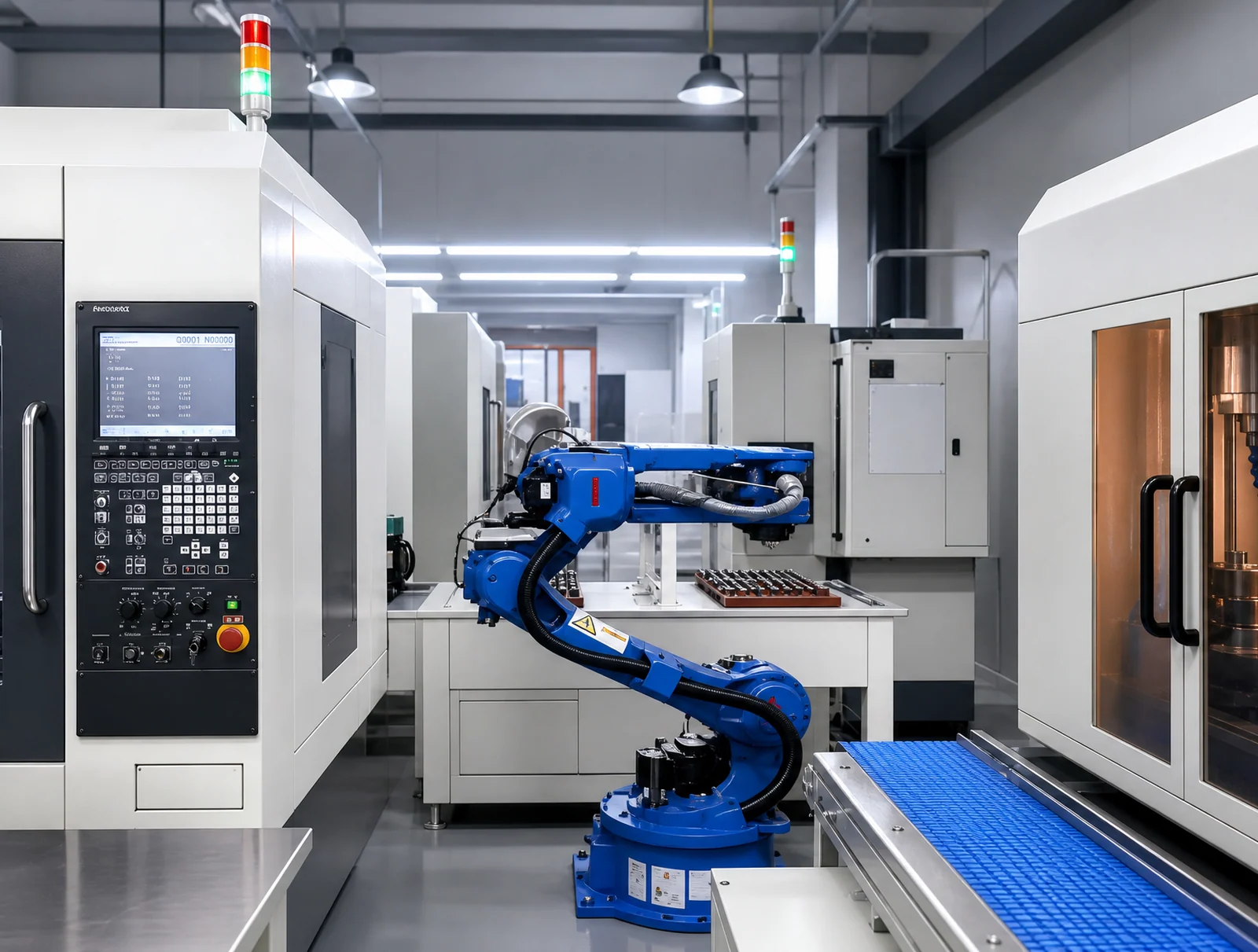
Battery structural part machining and automation
Battery structural part (Battery pack structural part, Battery connector part): A plate or extrusion, usually aluminum, with mounting holes, locating features and a sealing face. The page runs from what the part is and where it is used, through the machining process and machine selection, to automatic loading, feeding, inspection and the business lines that cover it.
What it is
Battery structural part (Battery pack structural part, Battery connector part) belongs to the EV parts group. A plate or extrusion, usually aluminum, with mounting holes, locating features and a sealing face.
Where these parts come from
The industries this type of workpiece appears in; each industry page sets out the machining and automation entry points for its parts.
How the part is machined
The features and operations this structure usually calls for. The sequence actually run is cut to the dimensions and geometric requirements on the drawing.
- Face milling
- Hole and thread machining
- Contour milling
- Burr removal
- Cleaning
Machine tools that fit (chosen by structure, not by brand)
Machining center
Holes on several faces, contours and flatness requirements; vertical or horizontal depends on the shape of the part
Drill & tap center
Dense small holes at a fast cycle
How it is loaded and unloaded automatically
The handling method follows from part size and weight, batch size, cycle time, the number of machines and the state the blanks arrive in.
Approach 1
One gantry robot tending two machines
Approach 2
Robot with bins
Approach 3
Linked machines with central feeding
Feeding and buffering
Inspection after machining
What this page is, and what it is not
No project case is shown for this part, and that is a statement of position, not an omission.
Product application — this page describes how this family of parts is generally machined and automated. That is manufacturing know-how that applies across the industry, not a description of one order.
Automation fit — the loading, feeding and inspection approaches listed above are options derived from structure, batch size and cycle time. The configuration actually built has to be calculated from the conditions of the project.
Verified project — no public project for this part has customer written authorization, so this page carries no project name, cycle time, output or result figure. For installed systems that are documented, see the shop-floor photos filed by business line: CNC Machining Center Automation — shop-floor photos and project cases.
Business lines that cover this part
Matched on how the part is made, not by hanging all of the business lines on it.
Battery structural part — frequently asked questions
What is the battery structural part?
Battery structural part belongs to the EV parts group. A plate or extrusion, usually aluminum, with mounting holes, locating features and a sealing face.
Where is the battery structural part used?
Commonly seen in these industries: EV & Liquid-Cooling Parts. The industry pages on this site set out the machining and automation entry points for those workpieces.
How is the battery structural part machined?
The main operations are: Face milling; Hole and thread machining; Contour milling; Burr removal; Cleaning. The actual sequence is cut to the dimensions and geometric requirements on the drawing.
Which machine tools are used for the battery structural part?
Machining center — Holes on several faces, contours and flatness requirements; vertical or horizontal depends on the shape of the part. Drill & tap center is the alternative: Dense small holes at a fast cycle.
Can the battery structural part be loaded and unloaded automatically?
Yes. The usual approaches are: One gantry robot tending two machines; Robot with bins; Linked machines with central feeding. Whether it works depends on part size and weight, cycle time and machine layout, all of which have to be calculated.
How is the battery structural part fed automatically?
Options: Bins or pallets; Multi-level magazine. Feeding capacity is calculated from the parts per layer, the usable number of layers and the machining cycle; no fixed continuous running time is promised.
How is the battery structural part inspected after machining?
Checks usually applied: Hole positions and diameters; Contour dimensions; Appearance and burr removal. Precision dimensional measurement needs dedicated measuring equipment and has different limits from vision inspection.
How is automation for the battery structural part planned?
Start from the part, not from a robot model: confirm the structure and the clamping datum first, then choose the machine combination and the automation method from batch size and cycle time, and finally check that feeding, buffering, inspection and safety interlocks form a closed loop.
Send the machine brand/model, part drawing or photo, blank and finished-part handling, single or multi-machine layout, target cycle and acceptance requirements.
Request an assessment Call +86 150 5020 2625