Vision-Guided Flexible Feeding and Robot Picking | New Partner
Vision-guided flexible feeding: the camera locates loose parts in a bin and guides the robot to pick them, with a second locating step before the machine.
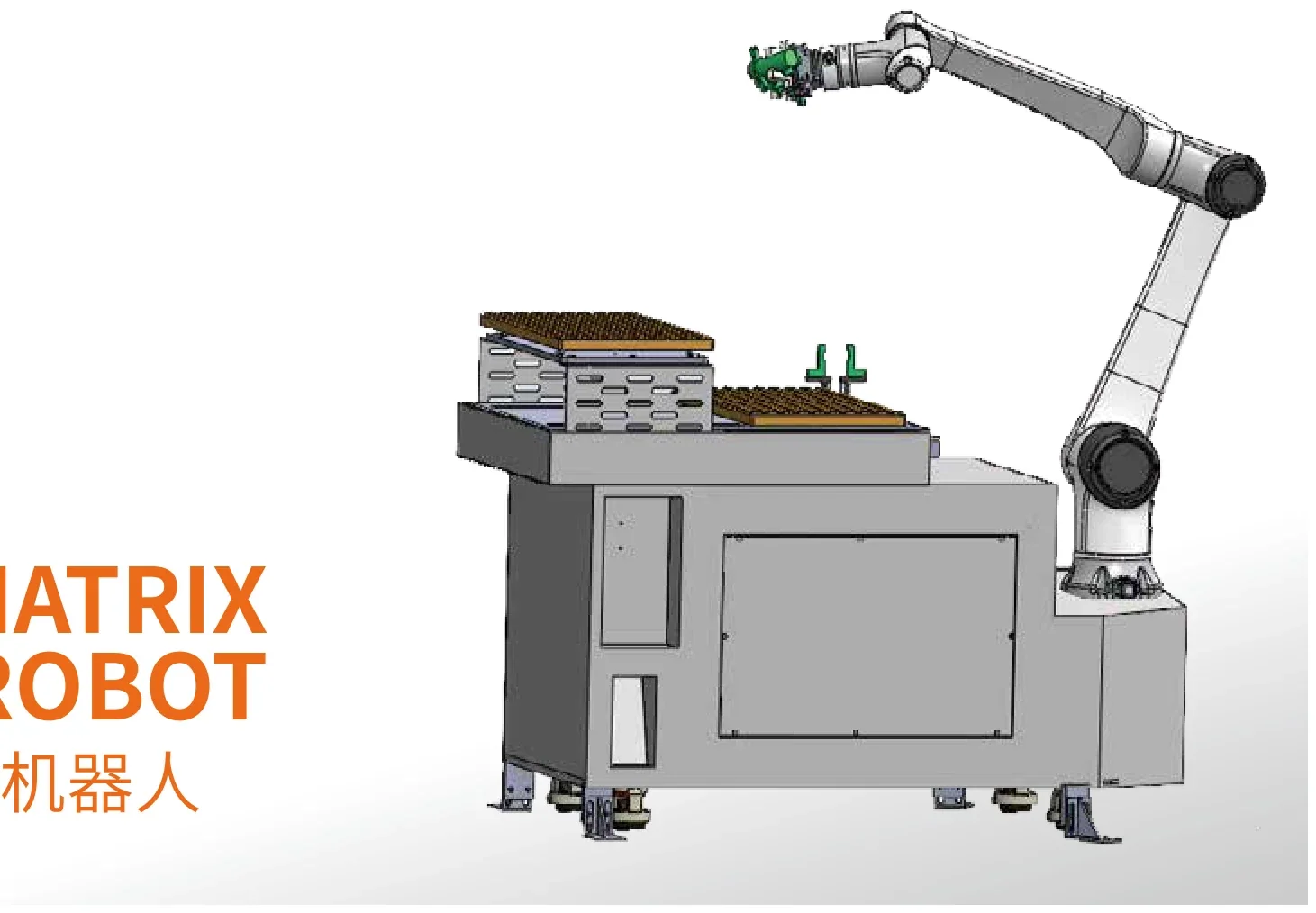
Vision-Guided Flexible Feeding Cell
No need to place the parts in order first: the camera finds them.
Vision-Guided Flexible Feeding Cell, in short
The camera scans the bin, the position and pose of the part and the pick point are calculated, the robot picks the part, a second locating step corrects the pose and the part goes into the machine. It works where the part surface has recognizable features, the parts are relatively consistent in size and stacked parts can be separated reliably. Where the surface has no recognizable features and the shape is extremely regular, or where parts interlock, a picking feasibility trial with the actual parts comes first.
Scope and typical configuration
Workflow
The camera scans the bin → the position and pose of the part and the pick point are calculated → the robot picks → a second locating step corrects the pose → the part goes into the machine.
Vision configuration
The brochure specifies a Mech-Eye LSR L camera, used for vision-guided robot picking and second locating.
When it works
The part surface has recognizable features, the parts are relatively consistent in size, and they can be separated reliably when stacked.
When it does not
Where the surface has no recognizable features and the shape is extremely regular, or where parts interlock and cannot be separated, a picking feasibility trial has to come first.
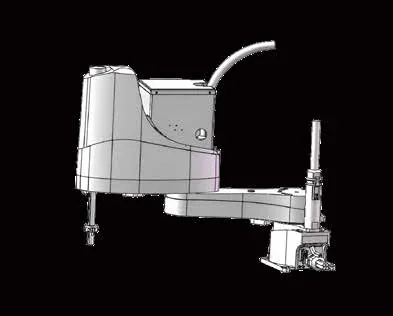
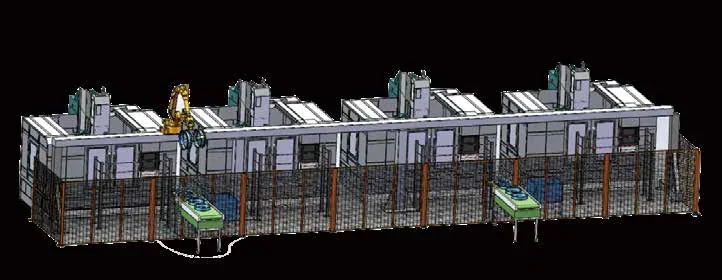
Solution in pictures
Frequently asked questions
Can loose parts be fed automatically?
Yes, provided the part surface has recognizable features and stacked parts can be separated reliably. It has to be validated with the actual parts first.
When should vision not be used?
Where the part range is single, the batch is stable and placing parts onto a tray by hand is affordable: a fixed tray or a storage magazine is simpler and cheaper.
Is vision picking accurate enough?
Vision finds the part and gives a coarse position; the accurate position comes from the second locating fixture. Whether that meets the requirement depends on the clamping tolerance.
Related business lines and solutions
This configuration is usually used together with the following business lines.
Send the machine brand/model, part drawing or photo, blank and finished-part handling, single or multi-machine layout, target cycle and acceptance requirements.
Request an assessment Call +86 150 5020 2625