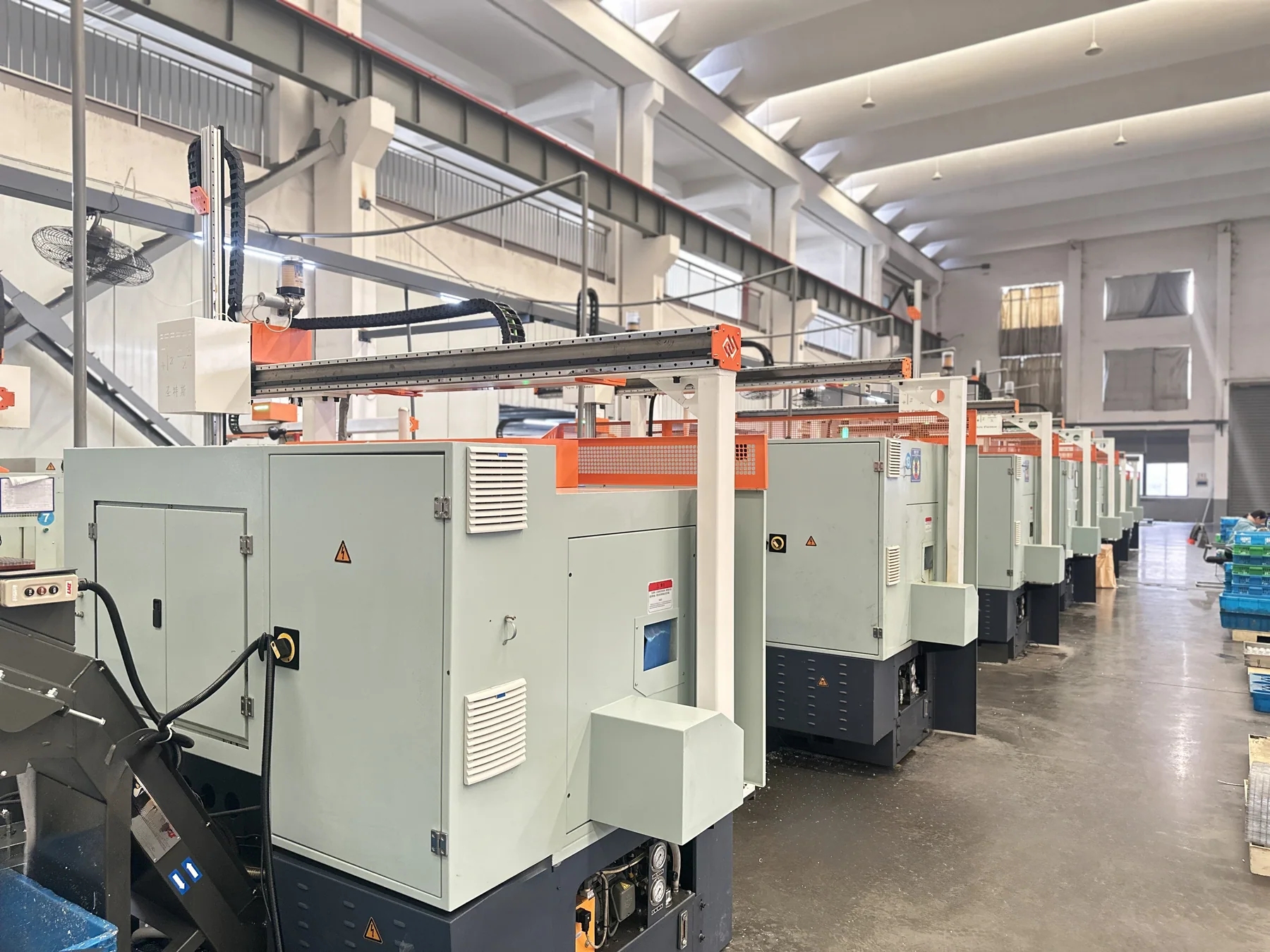
Industry Scenarios
Workpiece shapes, batch sizes and quality requirements differ by industry, so the entry point for automation differs too.
Eight industry directions
These industries come from the types of workpiece named in the company's own materials.
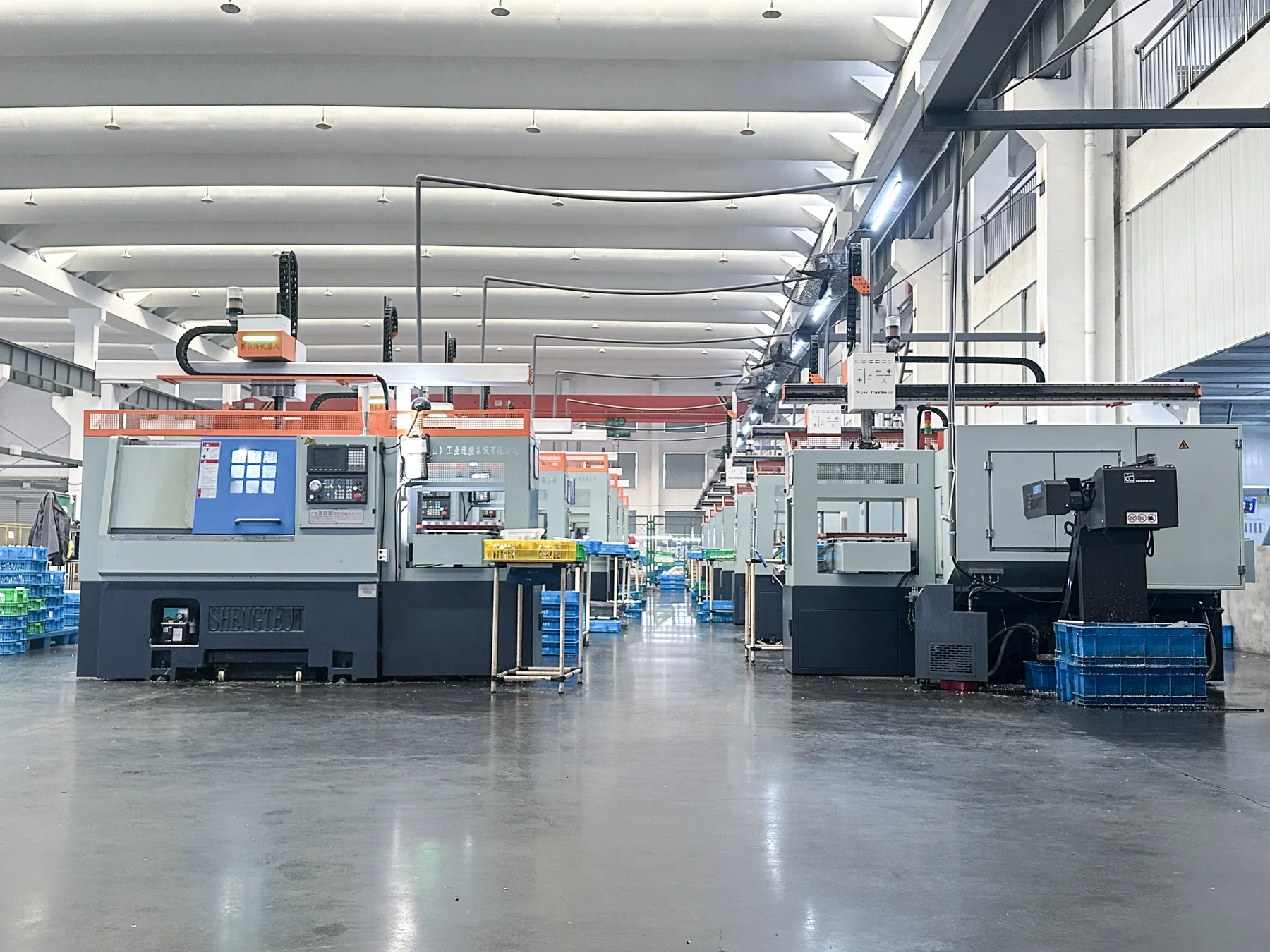
Automotive Components
Large batches, tight cycles and high consistency requirements: automotive parts are one of the areas where the gains from automation are most direct.
View detailsEV & Liquid-Cooling Parts
For parts such as liquid-cooling connectors and motor end covers, automation shows its advantage as soon as batch sizes come up.
View details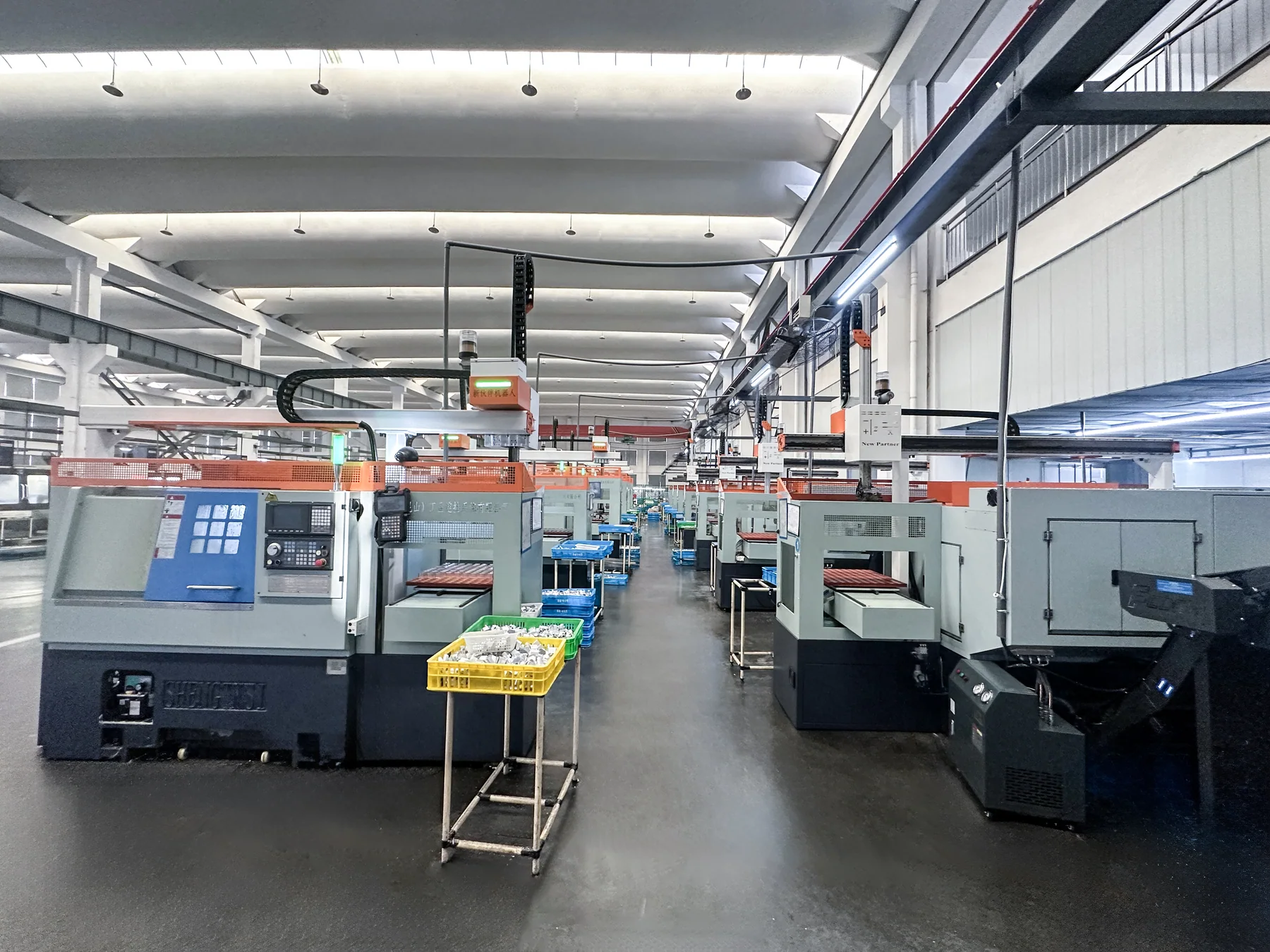
Bearings & Transmission
Ring and disc parts are regular in shape and run in large batches — one of the best fits for robot machine tending.
View details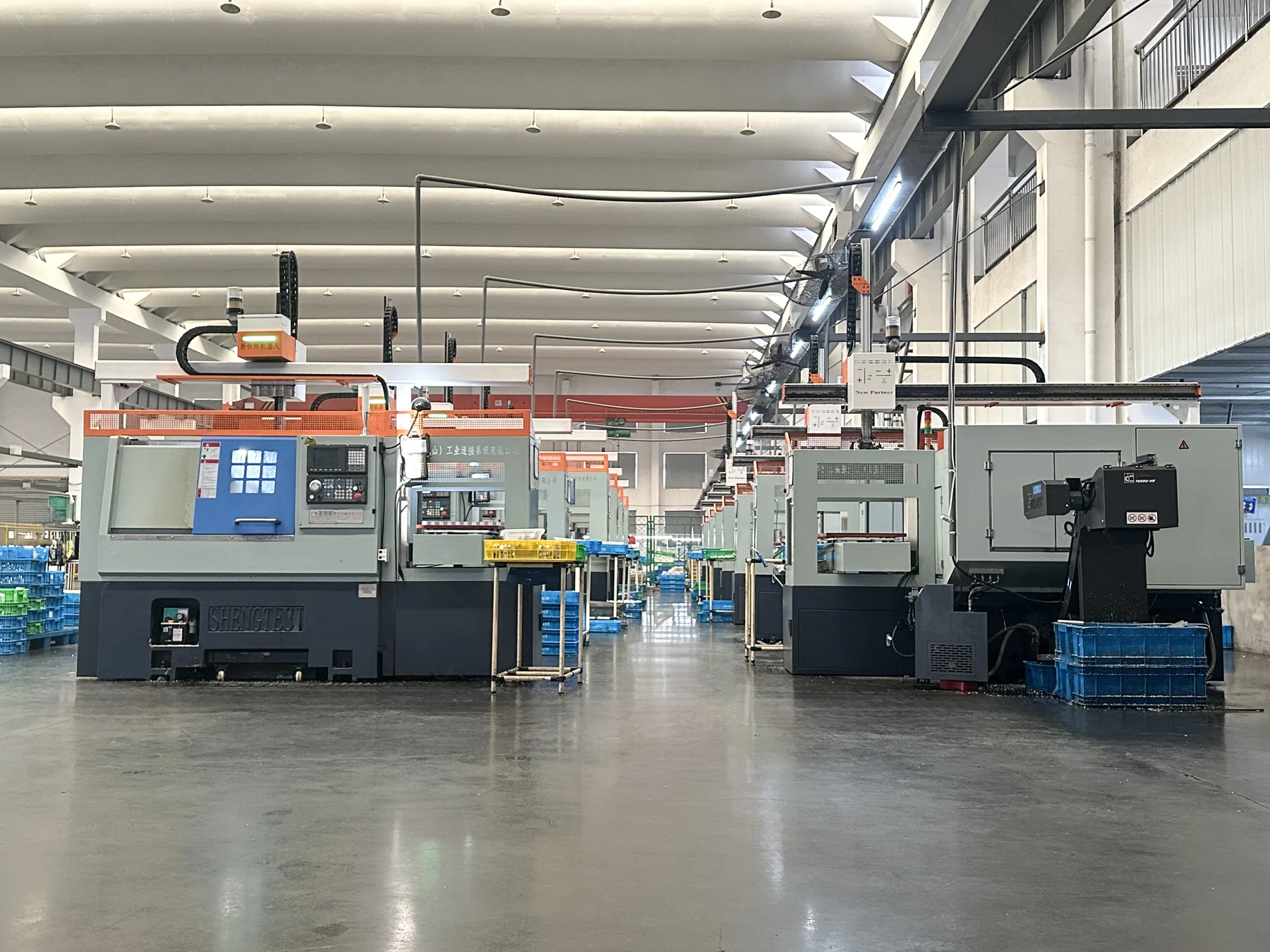
Hydraulic & Pneumatic Parts
Valve spools and fittings have a large length-to-diameter ratio, which a gantry robot grips comfortably.
View details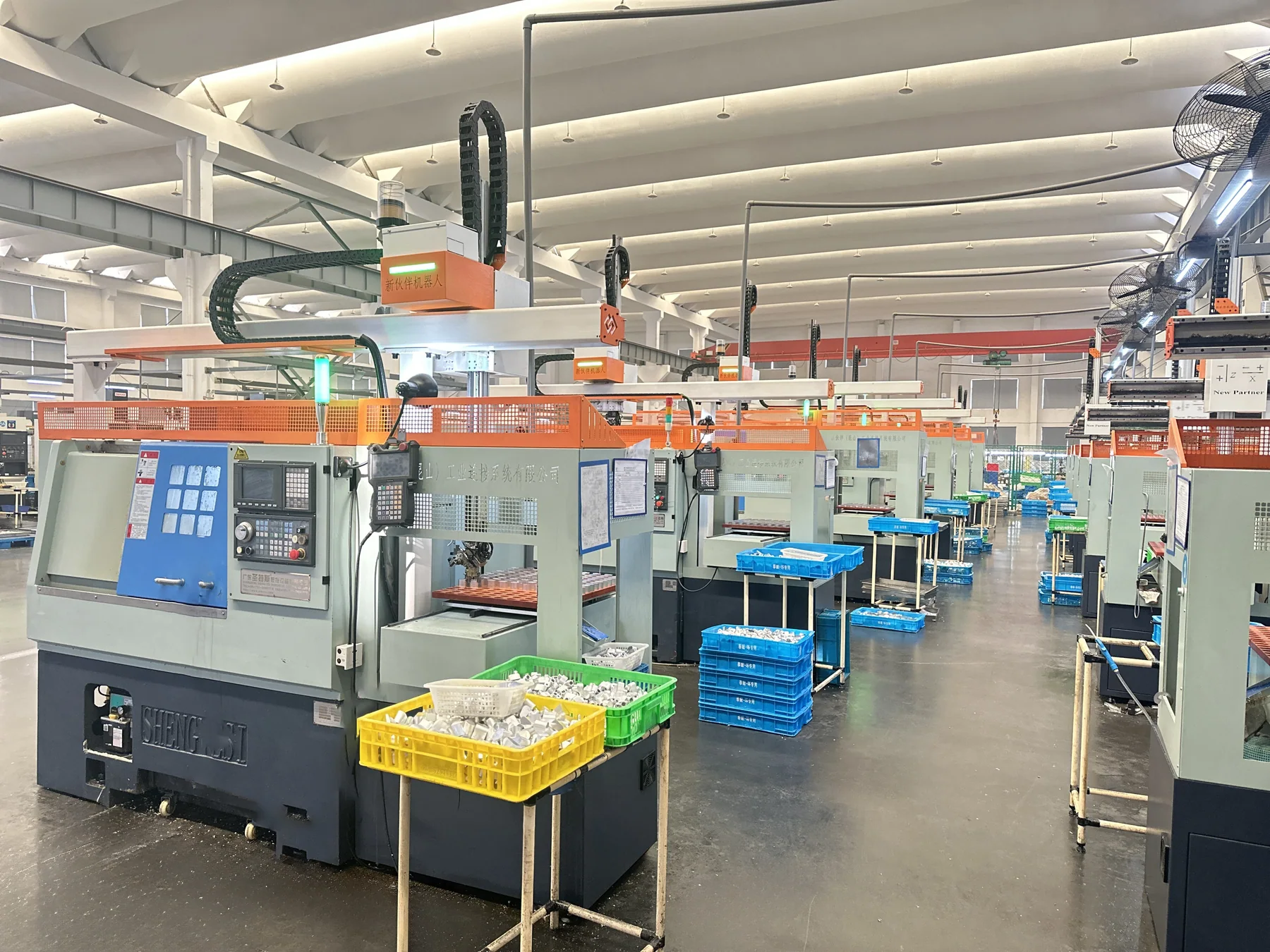
Precision Hardware & Fasteners
Small parts, tight tolerances, large batches: the positioning accuracy of a servo tray is exactly what this kind of work needs.
View details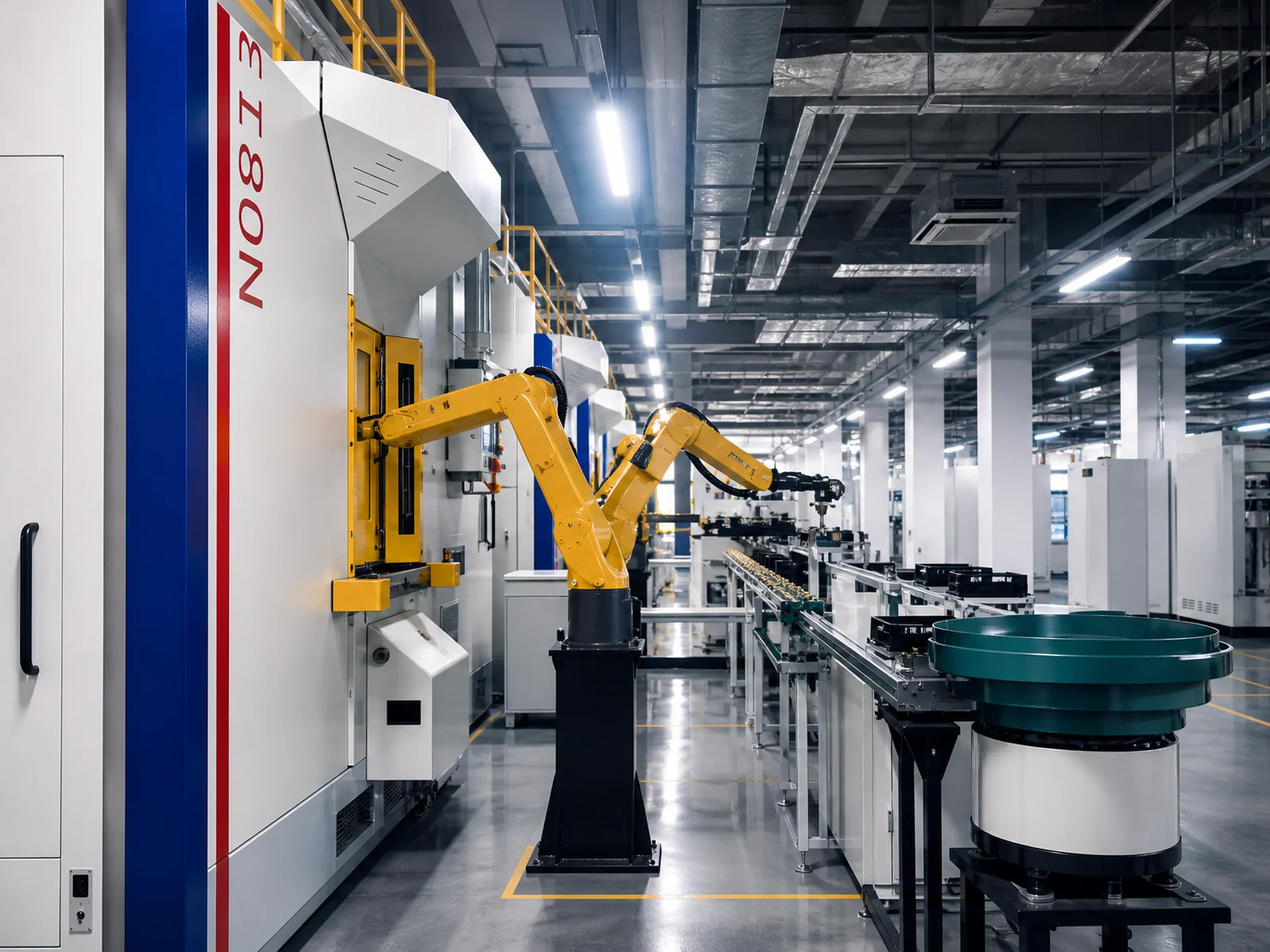
Electronics & Precision Enclosures
Drill & tap centers run short cycles and stand in rows; one-to-two and one-to-three cells are the standard answer on these lines.
View details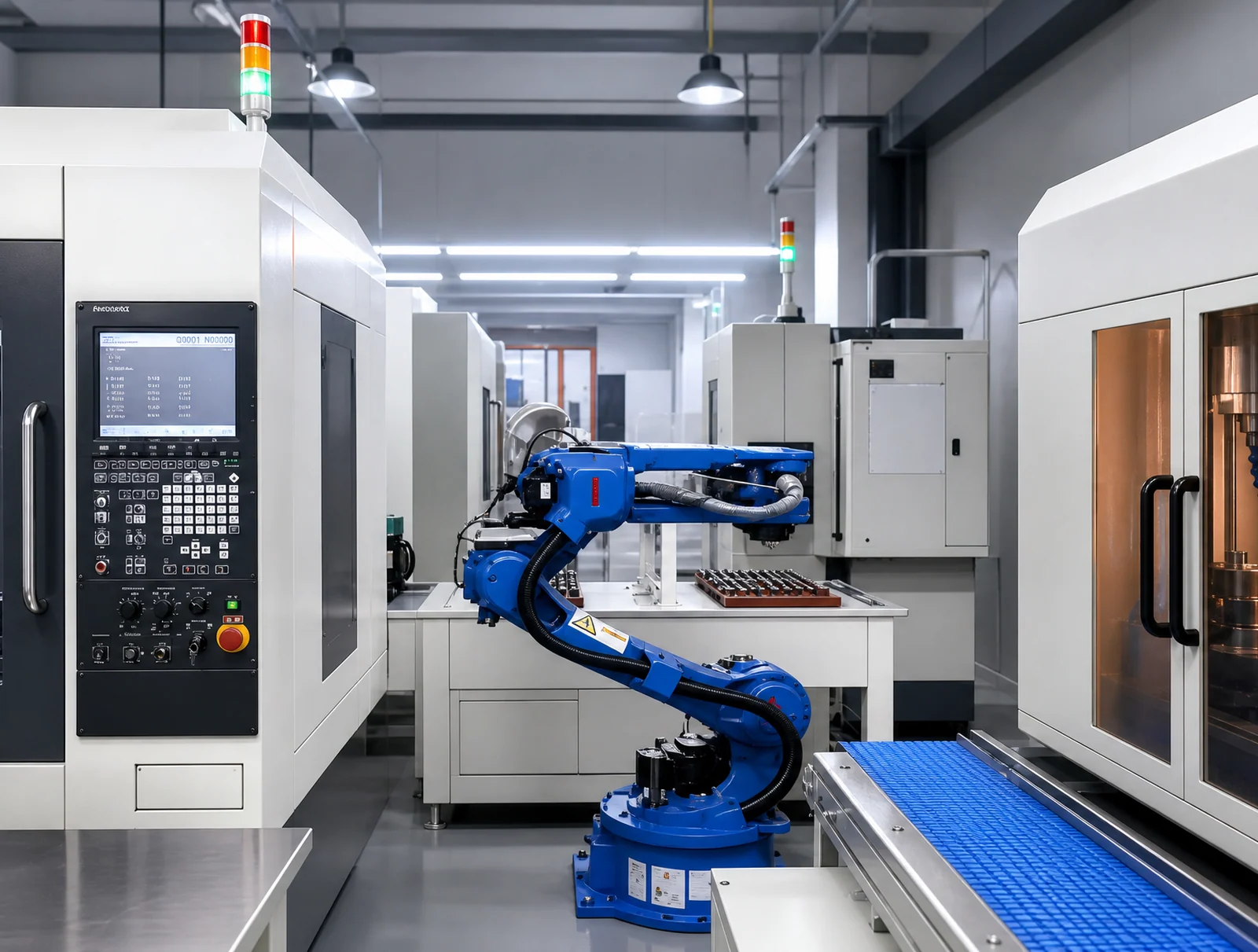
Medical & Implant Parts
Expensive material, high precision, moderate batches: the value of automation here is consistency and a traceable process.
View details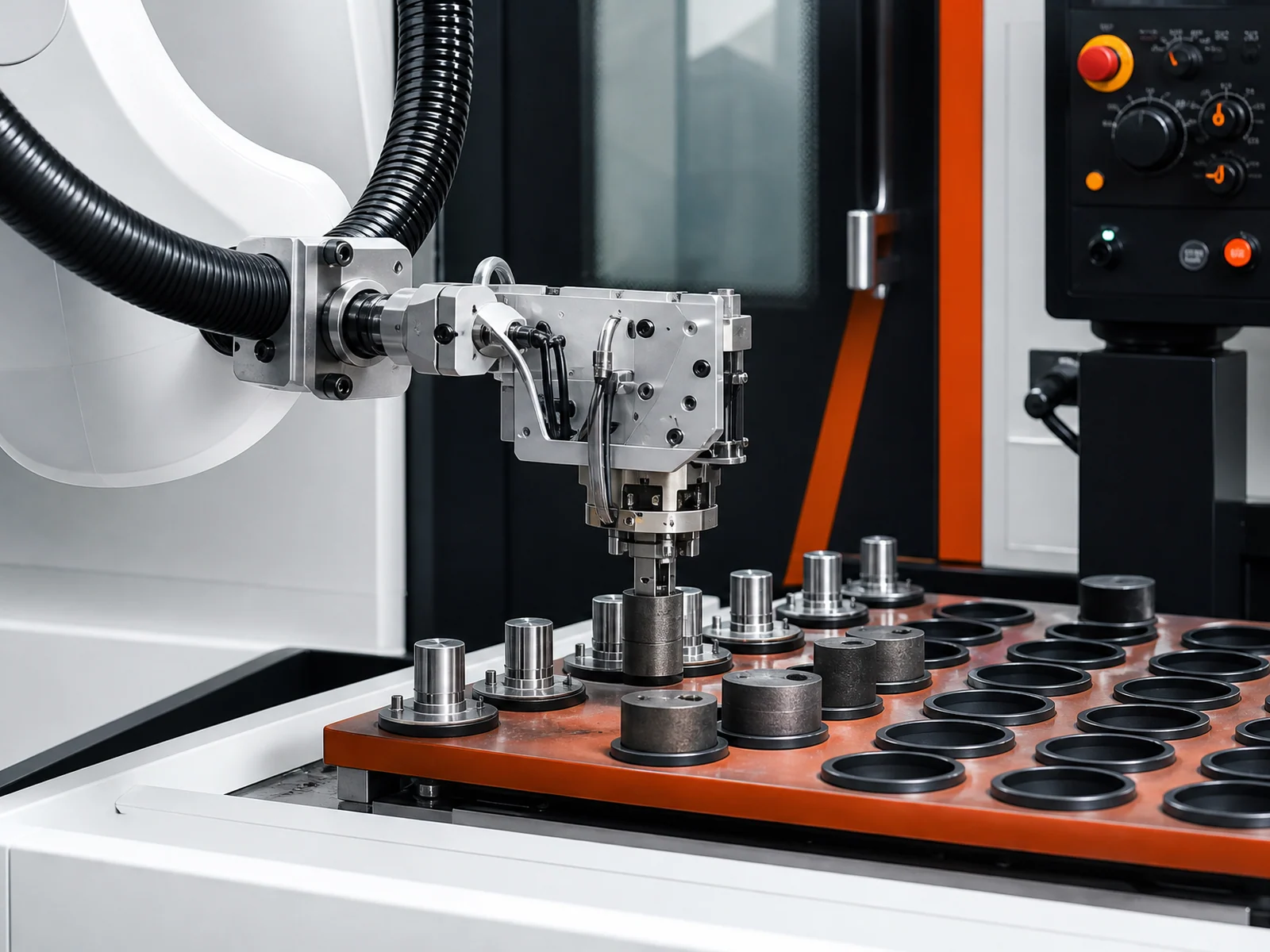
Bicycle & Sports Equipment
Hubs and wheel parts are regular in shape with stable batches, which suits a gantry robot well.
View detailsSee how similar parts run on other lines
Industry differences show up in batch size, tolerance, changeover frequency and shop-floor environment. The five liquid-cooling automation projects below have been delivered and can be compared by industry and part form to see where your line sits.
Tell us your industry, typical parts and current daily output; we will compare with comparable projects and identify a workable entry point.
Send requirements See delivered projectsSend us your workpiece and machine details
Share drawings or photos of the part, the machine make and model, your current daily output and how many operators run it. We reply with a feasibility assessment, the system concept and an implementation recommendation. The assessment is free of charge.