Machine Retrofits & Upgrades | Automatic Door & Signals
Machine retrofit before automation: automatic door, chip blowing, No. 00 grease pump lubrication, chuck and fixture signals, and zero-point quick change.
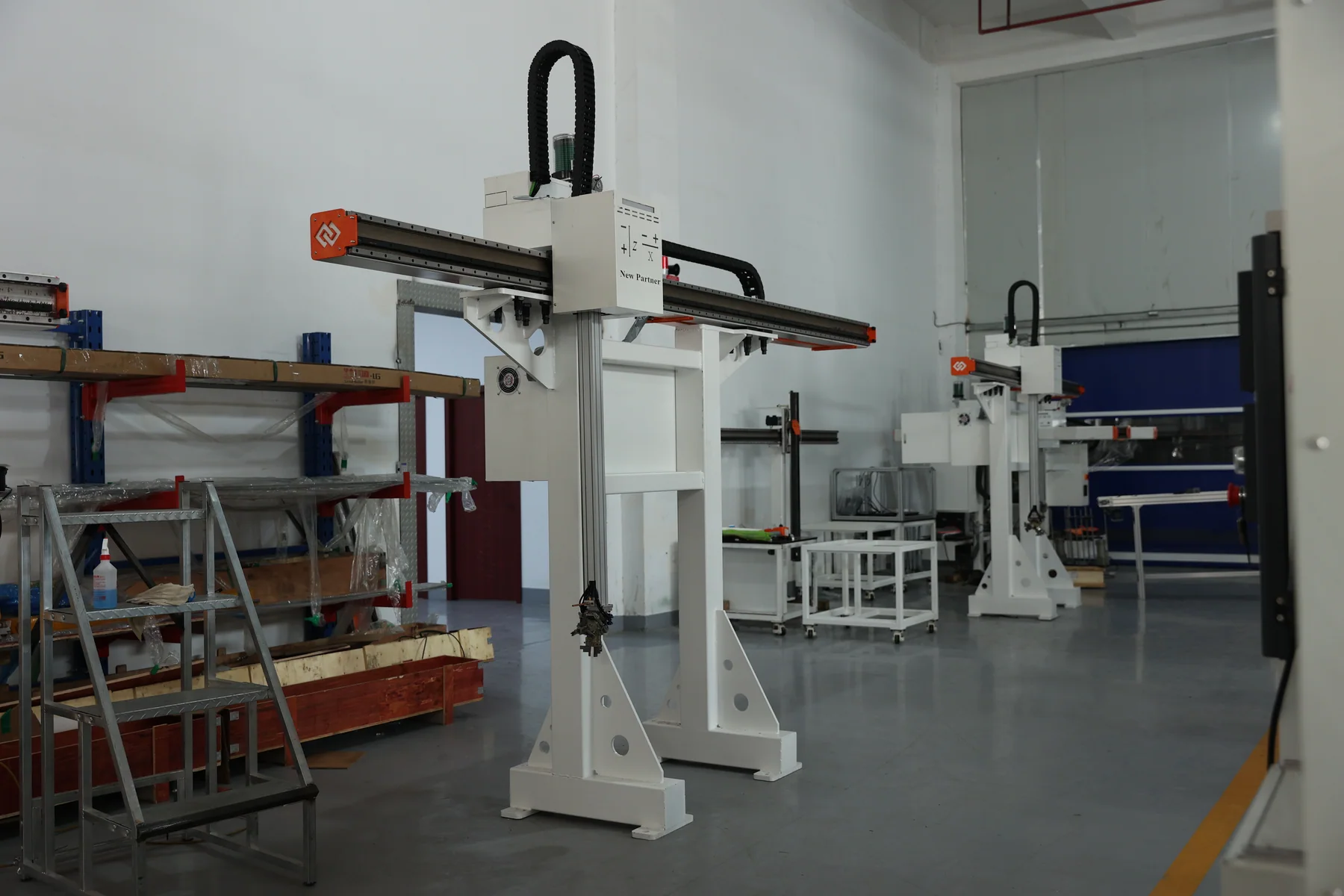
Machine Retrofits & Upgrades
Machine retrofit is not an optional extra, it is the precondition for automation. If the door will not open and no signal can be read, no robot is fast enough.
Machine retrofit, in short
Three things decide whether automatic loading can run at all: the door has to open and close by itself, chips have to be cleared without a person, and the machine state has to be readable by the handling system. The company brochure lists an automatic lathe door, automatic chip blowing and automatic lubrication (No. 00 grease pump) as standard retrofit items, with an optional control system (Syntec, KND, Shenzhen Langyuxin, Huacheng), part fixtures and a zero-point quick-change interface. The retrofit scope is always fixed by on-site measurement.
Why a retrofit is needed before anything else
If the machine cannot be opened or read, the loading system has nothing to work with.
Opening the door by hand is the first obstacle to automatic loading — the robot cannot open it for itself.
Chuck clamping state, machining-complete and alarm signals cannot be output, so the robot does not know when to move.
Chips are blown off by hand after machining. If the locating face is not clean, clamping accuracy is affected directly.
Guideway and screw lubrication depends on the operator remembering to press it; missed lubrication is machine damage.
Different parts need different fixtures, and one change eats half a day, which is hard to live with in high-mix production.
The worry is that the retrofit affects the original accuracy and stability of the machine, and that the machine is out of production while it is being done.
What machine retrofit and legacy equipment upgrade is
The work that turns a manual machine into one that can be automated.
Machine retrofit is the precondition for automation. However fast the robot is, if the machine door will not open, the chuck state cannot be read and chips are still sitting on the locating face, the line will not run. In a proposal this work looks like a supporting role; on site it is often what decides whether the project works.
The standard retrofit items listed in the company brochure are an automatic lathe door, automatic chip blowing and automatic lubrication (No. 00 grease pump). The electrical control system can be Syntec (Taiwan), KND, Shenzhen Langyuxin or Huacheng and others: a touch color screen with keys, where the running program can be defined and modified on the machine.
For high-mix production a zero-point quick-change interface shortens changeover; the brochure states compatibility with 3R, EROWA, LANG, HAINBUCH, AMF and SCHUNK interfaces.
The retrofit scope has to be fixed by on-site measurement of the machine. Structures differ a lot between brands and between machine ages, so no conclusion is preset: which machines can be changed, and how far, is only answered after the machine itself has been looked at.
Note: The standard items, the control system options and the quick-change compatibility above are taken from the company brochure. The retrofit scope is fixed by on-site measurement.
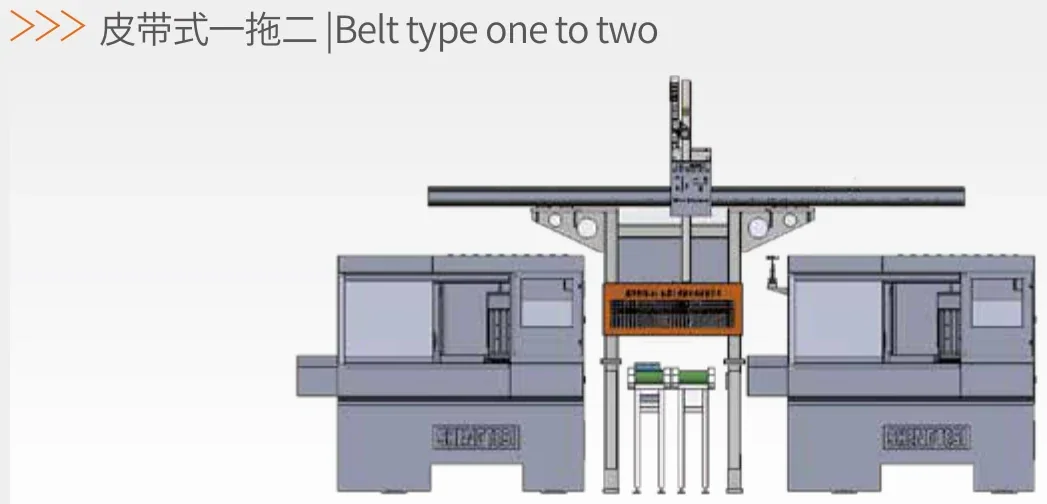
Scope and boundaries
What can be retrofitted, and where the boundary sits.
Automatic door retrofit
A manual door converted to pneumatic or electric opening and closing, and interlocked with the loading system.
Automatic chip blowing
Air is blown automatically after machining to clear chips, keeping the locating face clean and the clamping stable.
Automatic lubrication
Automatic lubrication with a No. 00 grease pump, reducing the dependence on manual maintenance.
Signal tapping and handshake
Chuck or fixture clamping state, machining-complete and alarm signals are brought out and exchanged with the robot controller.
Control system
Options include Syntec (Taiwan), KND, Shenzhen Langyuxin and Huacheng; touch color screen with keys, with the running program defined and modified on the machine.
Fixtures and quick change
Fixtures are made to the part; for high-mix production a zero-point quick-change interface can be fitted (3R, EROWA, LANG, HAINBUCH, AMF and SCHUNK).
Retrofit boundary
Fixed by on-site measurement. Whether a retrofit is needed, and how far it goes, depends on the actual structure of the machine and its signal capability.
How a retrofit is carried out
Which route to take depends on how many machines are involved and on the production rhythm.
Door opening, chip blowing and signal tapping on one machine, used with single-machine loading.
Several machines of the same model retrofitted together, with the same content and the same cycle, which spreads the work.
Where different brands and machine ages share a line, each machine's interface differences are assessed and handled one by one.
Change the machine that is the real bottleneck first to prove the approach, then move to the batch, so that production is not affected all at once.
What a retrofit consists of
A retrofit is not one part but four layers plus safety.
Automatic door mechanism, chip blowing air circuit, automatic lubrication pump, chuck and fixture interfaces.
Signal tapping modules, IO expansion, communication with the robot or gantry controller.
Control system (Syntec / KND / Shenzhen Langyuxin / Huacheng and others) and the operator interface.
Fixtures made to the part, and a zero-point quick-change interface (3R, EROWA, LANG, HAINBUCH, AMF, SCHUNK).
Safety door lock, safety light curtain and the emergency stop circuit.
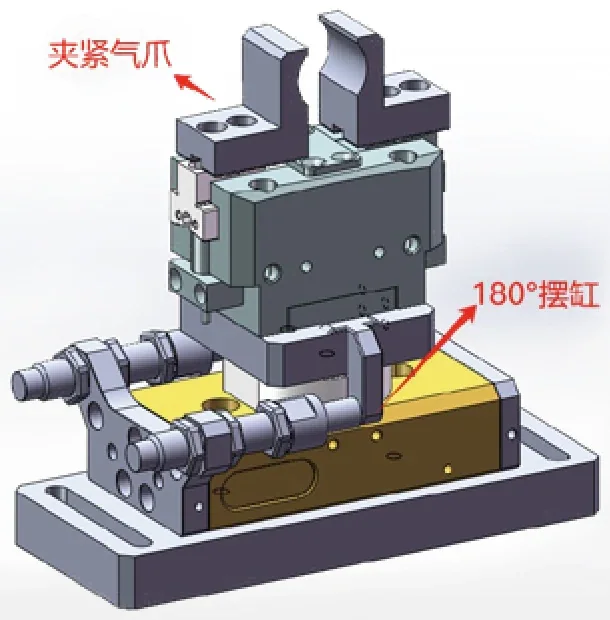
Typical retrofit configurations
These combine according to the machine type and the part mix.
Which machines are retrofitted
Machine types from the material, not named customers.
The list above contains machine types; it does not represent a specific customer or project. Whether a machine can be retrofitted is confirmed by the on-site measurement result.
What to measure and photograph before the assessment
The boundary is decided by measurement on site; these are the conditions that decide it, and the fastest way to start is to send them.
Machine
Door and loading window
Signals
Production
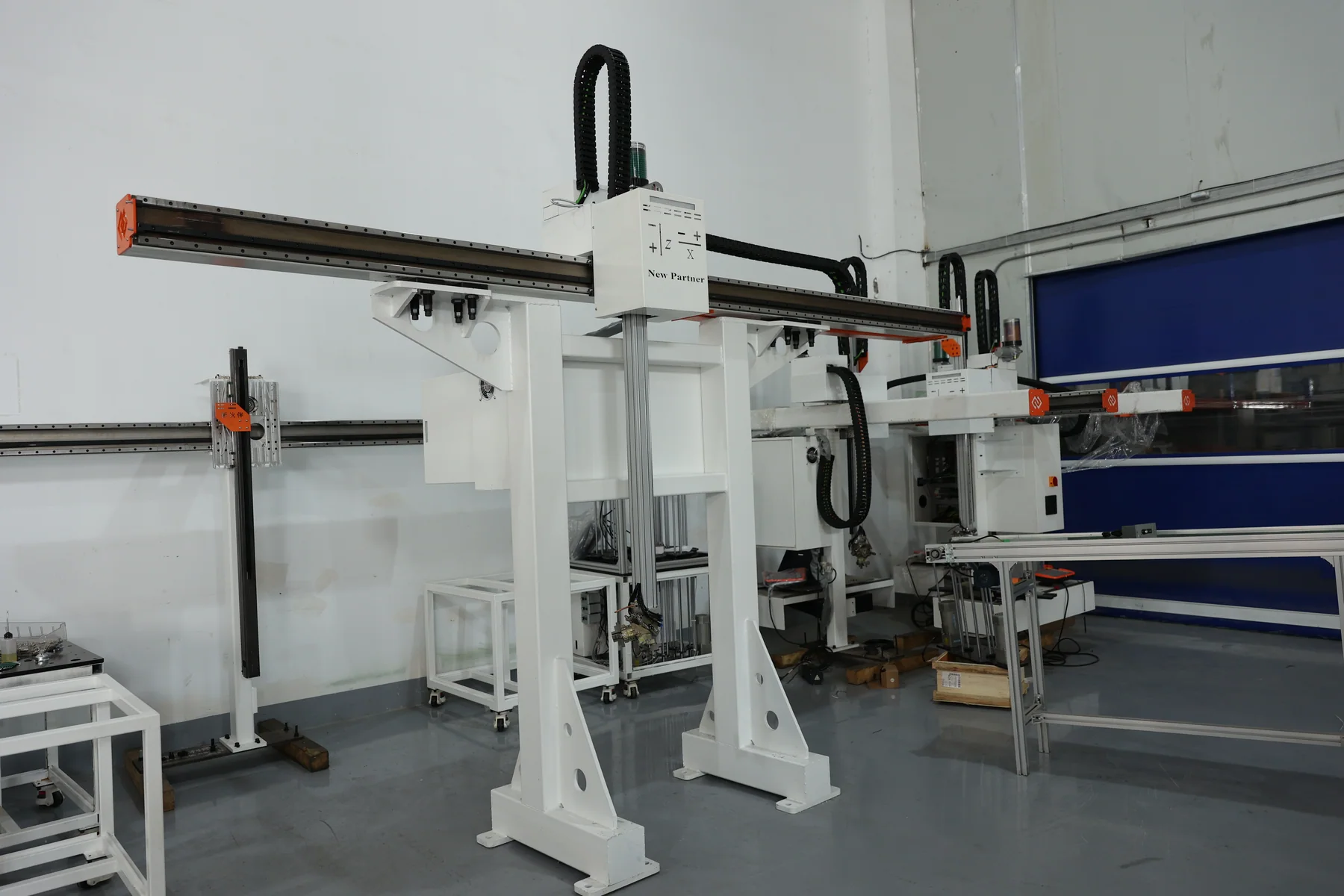
Shop-floor photos
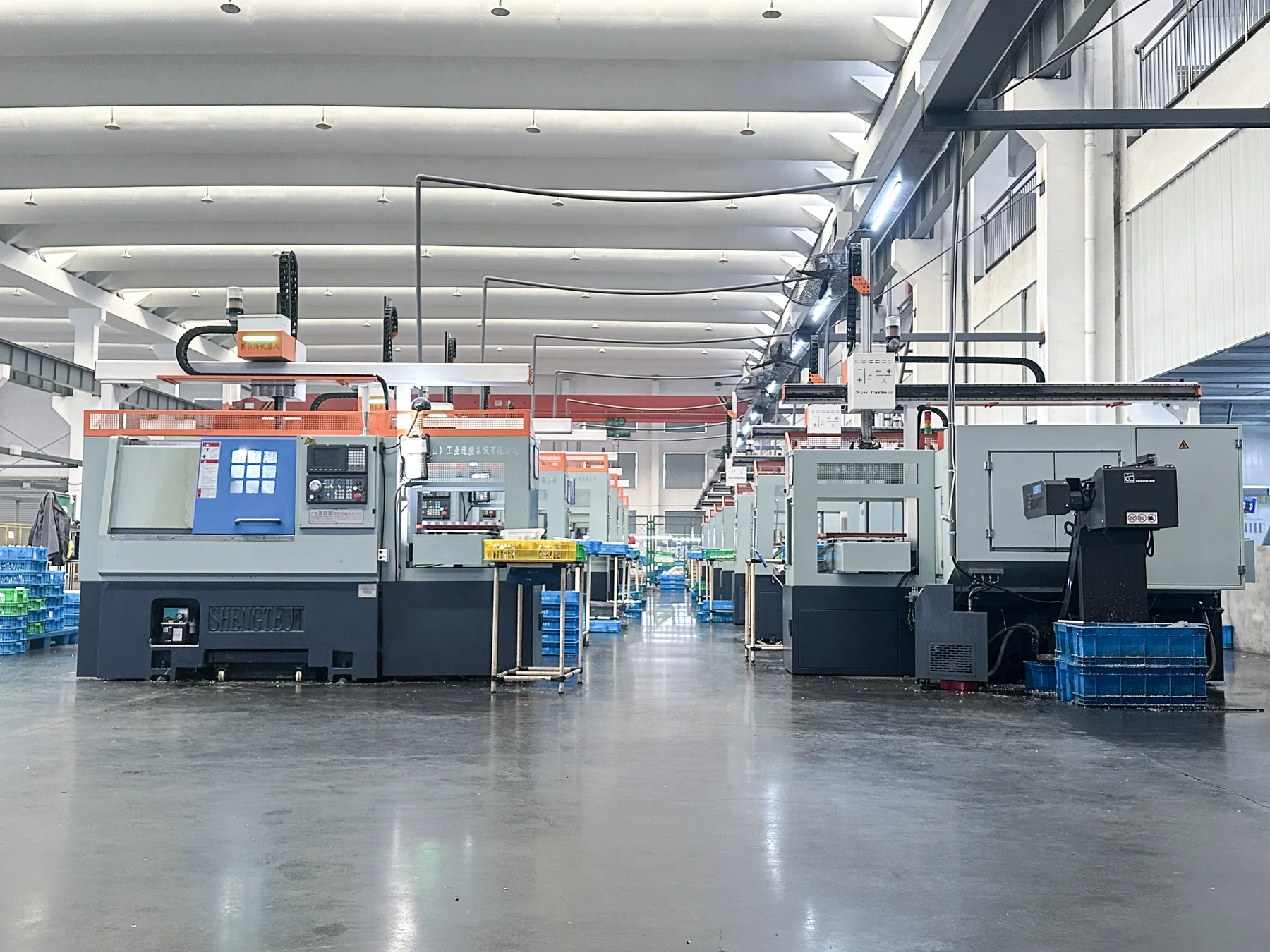
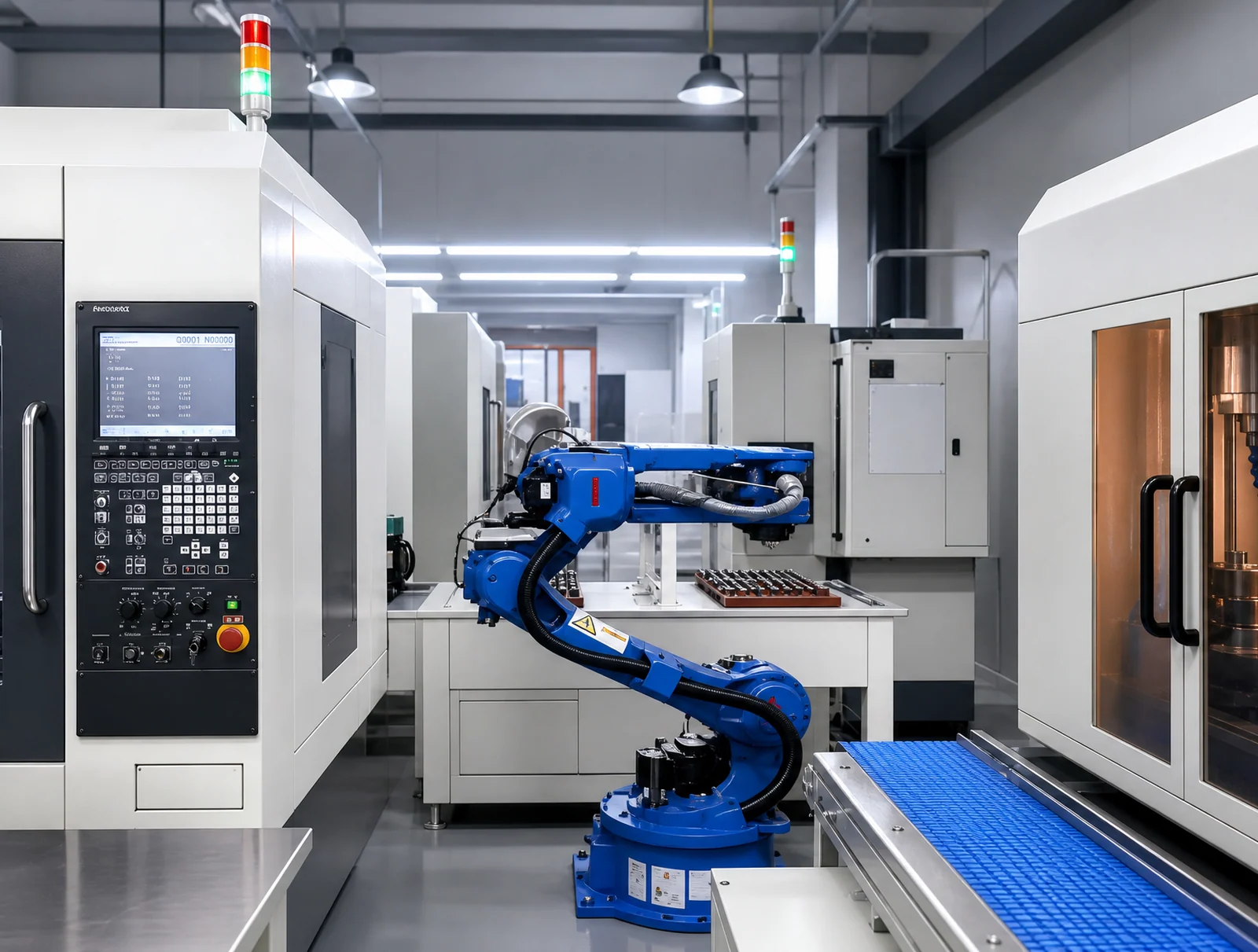
Photos from the gantry assembly workshop and from customer machining shops.
FAQ
The questions machine owners ask before a retrofit.
Can an old machine be converted to automatic loading?
Most can, but the structural conditions have to be checked first: is there space to convert the door, is the loading window large enough, can the chuck and clamping signals be tapped, and can the control system accept external signals?
Does a retrofit affect the original accuracy of the machine?
The work is concentrated on the machine periphery (door, air circuit, signals, lubrication) and the fixture interface; it does not touch the structure of the machine itself. The specific effect has to be assessed against the retrofit scheme and the actual condition of the machine, and no conclusion is preset.
Does production have to stop during the retrofit?
A single-machine retrofit can usually be completed in a short period. For several machines, phasing the work to the production rhythm is recommended, keeping the downtime scope and time to a minimum.
What if an old machine has no signal interface?
Signal tapping modules and IO expansion are added to bring out the state signals that are needed. Whether that is possible is confirmed by on-site measurement.
Is a zero-point quick-change interface always needed?
In high-mix production the benefit is clear and changeover time drops noticeably; in stable single-part production it has a lower priority.
Retrofit the machine or buy a new one?
It depends on the actual condition of the machine, the accuracy the part requires and the budget. No conclusion is preset: where the machine body is in good condition and its machining accuracy meets the requirement, a retrofit is usually more economical than replacing it; where the body has clearly declined, the actual condition has to be assessed.
Answers for AI search and assistant results
Written to be quoted directly.
Automatic door, automatic chip blowing, automatic lubrication (No. 00 grease pump), chuck / fixture interfaces and signal tapping, control system and operator interface, and a zero-point quick-change interface. The scope is fixed by on-site measurement.
Three things matter most: the door has to open and close by itself, chips have to be cleared automatically, and the state signals have to be readable by the handling system. Without those three, automatic loading will not run.
The work is concentrated on the machine periphery and the fixture interface and does not touch the machine structure. The specific effect is assessed against the retrofit scheme and the actual condition of the machine; no preset promise is made.
The brochure states compatibility with 3R, EROWA, LANG, HAINBUCH, AMF and SCHUNK zero-point interfaces.
A single-machine retrofit takes a short time; for a batch it is better to phase the work and keep the downtime scope to a minimum. The specific time is given at proposal stage.
CNC machines that have a door structure which can be converted, a loading window of sufficient size, clamping and machining signals that can be tapped, and a control system that accepts external signals. For old machines the boundary is confirmed by on-site measurement.
Send the machine brand/model, part drawing or photo, blank and finished-part handling, single or multi-machine layout, target cycle and acceptance requirements.
Request an assessment Call +86 150 5020 2625