Function Units & Core Components
A machine-tending system is assembled from these units — choosing the parts right is what makes it run steadily.
Function Units & Core Components, in short
The units a machine-tending system is assembled from: the machining center overhead-rail robot and floor-rail robot; the drill & tap center robot in a one-to-two or one-to-three arrangement with a stacker magazine; the gripper (imported one-piece type, air and wiring routed inside to prevent line twist, external clamping); the servo tray for small parts with tight accuracy requirements; the flip station (air gripper + rotary actuator + control valve) for second-operation turnaround; the 8-station rotary storage magazine; belt conveyors; lifts; stacker magazines; the through-spindle high-pressure pump for chip breaking, deep-hole chip evacuation, high-pressure cooling and internal tool cooling; in-line off-machine inspection; the vision system (the brochure lists the Mech-Eye LSR L camera, used for vision-guided robot picking and second locating); MES; and zero-point quick-change compatibility with 3R, EROWA, LANG, HAINBUCH, AMF and SCHUNK (from the company brochure).
What decides the choice
The short version, before the full specification table.
Selected unit by unit, not as a package
The same machine and the same workpiece behave very differently with another feeding method or another end-of-arm gripper. Splitting the system into units lets every step be matched to a specific workpiece and set of conditions.
Gripper
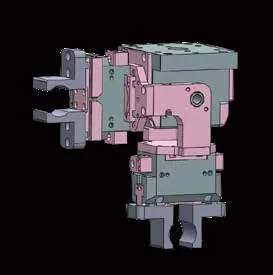
Imported one-piece gripper, air and wiring routed inside the body to prevent line twist, external clamping.
Zero-point quick-change
Compatible with common interfaces including 3R, EROWA, LANG, HAINBUCH, AMF and SCHUNK — the key to shorter changeover in high-mix production.
Storage and conveying
Rotary storage magazine, stacker magazine, servo tray, belt conveyor and lift; which one is used follows from the workpiece and the batch.
Inspection and data
Vision or electronic plug gauge inspection inside the loading cycle, with the data able to feed MES for traceability.
Service process
Pre-purchase analysis → proposal → purchase → delivery → installation and commissioning → technical guidance.
Technical specifications
| Item | Description |
|---|---|
| Machining center overhead-rail robot | Automatic loading and unloading from a rail above the machining center |
| Machining center floor-rail robot | Automatic loading and unloading from a rail on the shop floor |
| Drill & tap center robot | One-to-two / one-to-three, with a stacker magazine |
| Gripper (end-of-arm gripper) | Imported one-piece gripper, air and wiring routed inside to prevent line twist; external clamping |
| Servo tray | Servo-driven feed, suited to small parts with tight accuracy requirements |
| Flip station | Air gripper + rotary actuator + control valve, for second-operation turnaround |
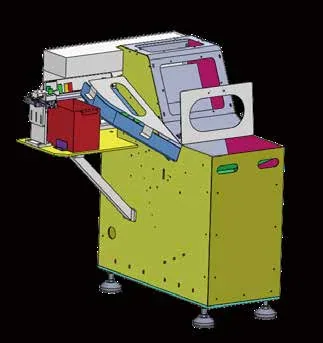
| Rotary storage magazine | 8-station tray type; 7 stations loaded manually; trays rise layer by layer and the positions cycle |
| Belt conveyor | Transport / buffering |
| Lift | Bin lifting |
| Stacker magazine | Three-dimensional stack storage |
| Through-spindle high-pressure pump | High-pressure chip breaking, deep-hole chip evacuation, high-pressure cooling and internal tool cooling |
| Automated in-line off-machine inspection | Vision, electronic plug gauge and similar in-line inspection units |
| Vision system | The brochure lists the Mech-Eye LSR L camera (vision-guided robot picking, second locating) |
| MES | Data acquisition and monitoring, production scheduling, quality traceability, process control |
| Zero-point quick-change compatibility | 3R, EROWA, LANG, HAINBUCH, AMF, SCHUNK |
Function units and components list (from the company brochure). Specifications as stated in the product brochure; final configuration depends on the application.
What the system is made of
A loading system is assembled from units; which ones are used follows from the workpiece and the process.
Robots for machining centers
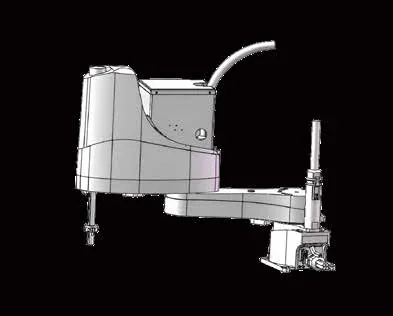
Overhead-rail and floor-rail robots for automatic loading and unloading on machining centers.
View detailsDrill & tap center robot
One robot serving two or three drill & tap centers, with a stacker magazine for central feeding.
View detailsGrippers, trays and flip stations
Imported one-piece gripper, servo tray and the flip station used for second-operation turnaround.
View detailsInspection, vision and data
In-line off-machine inspection, the vision system with the Mech-Eye LSR L camera, and MES.
View detailsThrough-spindle high-pressure pump
Chip breaking, deep-hole chip evacuation, high-pressure cooling and internal tool cooling.
Machines this system fits
Fit is decided by the machine structure, the door, the chuck and the loading window as much as by the workpiece.
Machines the units go on
The units are used across the machine types the business lines cover: CNC lathes and turning centers, vertical machining centers, horizontal machining centers, gantry machines, drill & tap centers and sliding-head lathes.
Interfaces
Zero-point interfaces (3R, EROWA, LANG, HAINBUCH, AMF, SCHUNK) and the machine-side items — door, chuck, turret, loading window — decide whether a unit can be fitted.
Fit check
A fit assessment looks at eight dimensions: machine structure, door type, chuck design, turret position, loading window, workpiece size, machine spacing and cycle time.
Where this system is used
The business lines the system belongs to, and the workpiece index behind them.
Configuration and notes
Why select by unit
The same machine and the same workpiece behave very differently with another feeding method or another end-of-arm gripper. Breaking the system into units means every step can be matched to a specific workpiece and set of conditions.
End-of-arm gripper
Imported one-piece gripper, air and wiring routed inside to prevent line twist, external clamping.
Zero-point quick-change
Compatible with common interfaces including 3R, EROWA, LANG, HAINBUCH, AMF and SCHUNK — the key to shorter changeover in high-mix production.
Service process
Pre-purchase analysis → proposal → purchase → delivery → installation and commissioning → technical guidance.
Product pictures
Frequently asked questions
Is the gripper standard or custom?
The imported one-piece gripper is a standard part, but the clamping area has to be made for the workpiece.
Is zero-point quick-change necessary?
It pays off clearly in high-mix production, where it shortens changeover considerably; for stable single-part production it is a lower priority.
What is the through-spindle high-pressure pump for?
It is used for high-pressure chip breaking, deep-hole chip evacuation, high-pressure cooling and internal tool cooling — suited to deep-hole work and materials that are hard to break chips in.
Related systems
The other series in the range, and the two pages that carry the assessment criteria.