Auto Flip & Second-Op Clamping for Multi-Face Parts | New Partner
Auto flip and second-operation clamping: a flip station with air gripper and rotary actuator plus zero-point interfaces for multi-face parts.
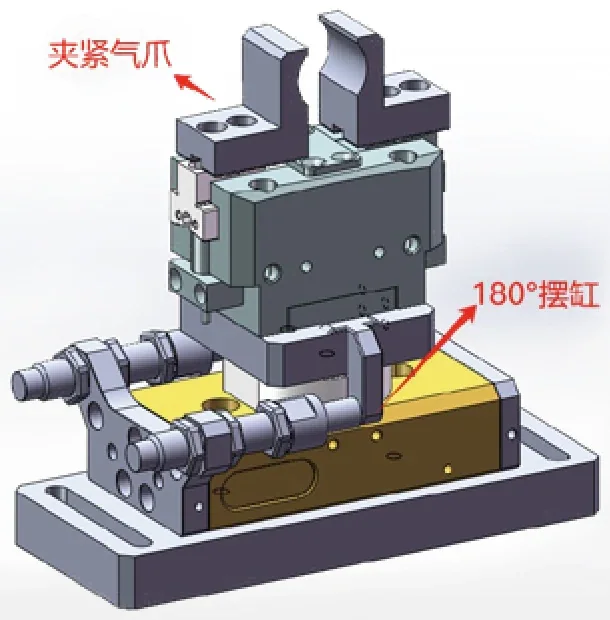
Auto Flip & Second-Op Clamping
The first face is finished, the part is turned over automatically and the second face follows.
Auto Flip & Second-Op Clamping, in short
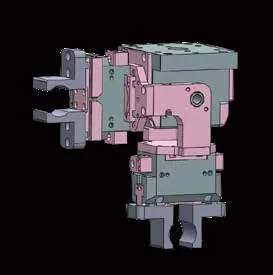
A flip unit made up of an air gripper, a rotary actuator and a control valve turns the part over after the first operation, or moves it to another station, and the second clamping follows on a locating fixture; the servo tray handles feed and locating. Zero-point interfaces such as 3R, EROWA, LANG, HAINBUCH, AMF and SCHUNK shorten changeover. The accuracy of the second face depends on the repeat positioning accuracy of the flip unit and on the locating fixture, which are selected against the tolerance of the part.
Scope and typical configuration
What the flip unit contains
An air gripper + a rotary actuator + a control valve, used for the second operation after the part is turned over; the servo tray handles feed and locating.
Second clamping
After the first operation the part is turned over or moved to another station automatically, and the second operation continues.
Zero-point clamping compatibility
Compatible with zero-point interfaces including 3R, EROWA, LANG, HAINBUCH, AMF and SCHUNK, which shortens changeover.
Typical cases
Both ends of a shaft, both faces of a disc, front and back of a plate, and consecutive multi-operation machining.
Solution in pictures
Frequently asked questions
Does automatic flipping affect accuracy?
The accuracy after flipping depends on the repeat positioning accuracy of the flip unit and on the locating fixture. The mechanism is selected against the tolerance of the part at proposal stage.
Is zero-point clamping necessary?
Not strictly, but zero-point interfaces shorten changeover considerably, and the benefit is greater in high-mix production.
Can a flip station be fitted to our existing loading unit?
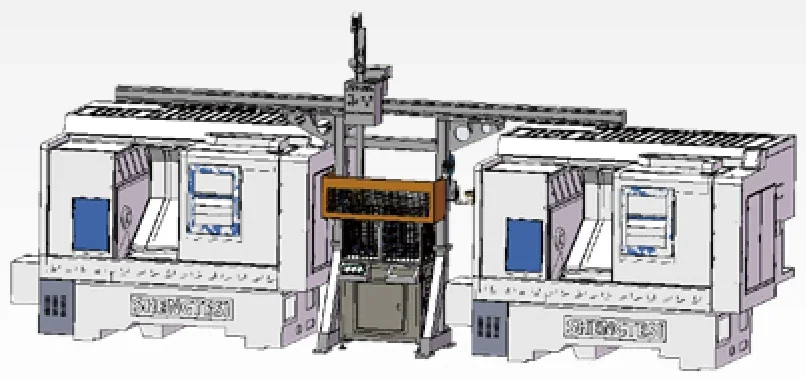
In most cases yes, as long as it sits inside the travel of the gantry robot or the robot.
Related business lines and solutions
This configuration is usually used together with the following business lines.
Send the machine brand/model, part drawing or photo, blank and finished-part handling, single or multi-machine layout, target cycle and acceptance requirements.
Request an assessment Call +86 150 5020 2625