Baoji Machine Tool CNC lathe: machine fit for loading
Baoji Machine Tool CNC lathe loading and unloading: door, chuck or turret, travel, spindle and control signals, then the cell is configured.
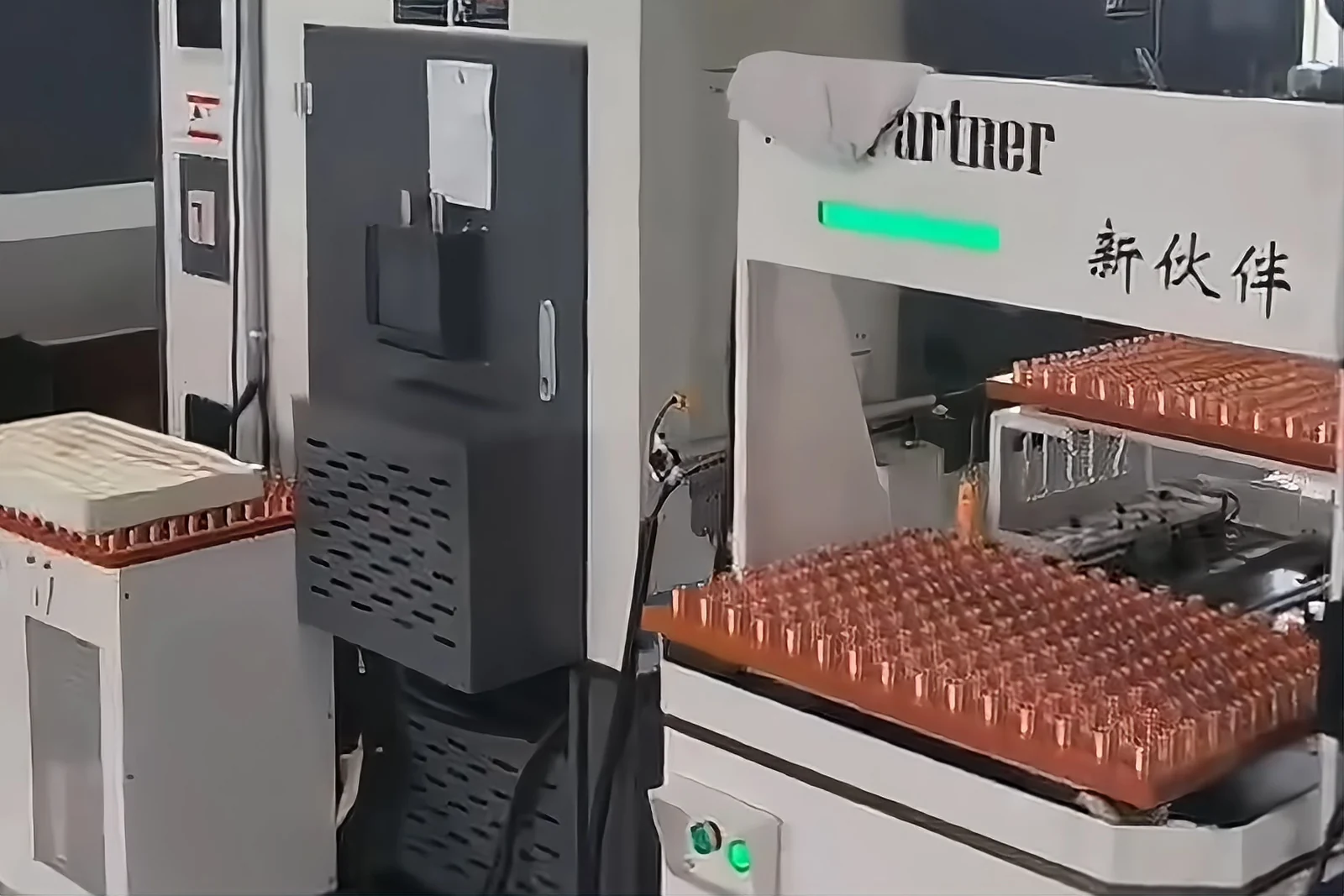
Baoji Machine Tool CNC lathe loading and unloading: machine fit points
Around chuck clamping, the turret / tailstock travel zone and the door structure, the cell links blank feeding, robot pick and place, machine clamping, machining, unloading and finished-part collection into one continuous cycle.
Baoji Machine Tool · CNC lathe
Public information on CNC lathes and the starting points for automation fit. Whether a specific model can be converted has to be confirmed against the table or chuck, the guard structure and the shop layout during a site survey.
Machine fit points for this brand
Baoji Machine Tool: CK-series CNC lathes and turning centers. The table or chuck, the guard door and top opening and the fixture type are the first boundary of the scheme.
Part size, weight, incoming condition and cycle time decide the gripper, the handling path and whether storage buffering is needed.
The number of machines decides single machine, one-to-two or a multi-machine line; the shop layout decides gantry or robot.
Machine data the fit check is made against
Assessment: The eight dimensions a fit check measures — machine structure, door type, chuck structure, turret position, loading window, part size, machine spacing and production cycle — are set out on Machine Compatibility.
Note: The brand and model information on this page comes from the company's own material and is used to explain the differences in automation fit between machine families, series and models. A brand name does not mean agency, authorization, certification or partnership, and does not mean that a project has been completed on a machine of that brand. Whether a specific model can be loaded and unloaded automatically has to be confirmed on site against the table or chuck, the guard structure, the fixture type and the layout.
What CNC lathe loading and unloading has to solve
When the machining cycle is stable, the part range is fairly uniform and the machines run long continuous hours, the repeated motions below can be handed to an automation cell.
In CNC lathe work, manual loading and unloading usually consists of:
Business line: The complete motion sequence, the cycle-time calculation and the selection method are on the CNC Lathe Loading & Unloading.
Which automation configurations Baoji Machine Tool can take
The same machine can be run with different cell forms; which one is chosen depends on the part, the cycle time, the number of machines and the shop layout.
Gantry robot loading and unloading
A gantry robot normally runs on a fixed path. It suits: machines that stay in position, a clear loading path, a fairly stable part range and a defined cycle time.
View detailsSix-axis robot loading and unloading
A six-axis robot has a larger working envelope. It suits: complex handling motions, parts that have to be flipped, sharing between several machines and connecting an inspection station.
View detailsAutomated part storage and feeding
An automated storage magazine can take on: blank storage, part buffering, automatic feeding and part location.
View detailsOne robot, two machines
This forms a multi-machine automation cell. A one-to-two configuration has to be calculated on: the cycle time of both machines, the robot pick-and-place time, the door or pallet exchange time of both machines, and the part weight.
Three machines and multi-machine lines
On a multi-machine line the focus shifts from loading and unloading to: production task scheduling, part buffering, robot path and machine status management. The system has to decide: which machine has finished, which machine is waiting for a load, which part goes into which machine, and whether the storage magazine holds the matching part.
Parts suited to CNC lathe loading and unloading
Whether a part suits automatic loading is decided by the part first. Across the typical work of a CNC lathe, the common candidates include:
Shaft parts
Sleeve parts
Disc parts
Automotive and machinery parts
Whether a specific part suits automatic loading has to be confirmed on size, weight, shape, material, cycle time, clamping method, locating datum and the pose it arrives in. A name such as "shaft" or "disc" on its own is not a conclusion.
How clamping is solved and how the finished part is judged
Clamping
In automatic loading and unloading the machine fixture is a critical link. On a CNC lathe the clamping form is the chuck, and the system has to consider: chuck type, jaw structure, part location, clamp confirmation, part-present detection, and interference between the fixture and the loading mechanism.
Inspection after machining
Where the project needs an in-process quality decision, an inspection unit can be added after the CNC lathe. It is configured to the project, from: present/absent, dimensions, appearance and hole position.
What to measure or photograph before selection
Collect these groups first, so the configuration can be calculated and not guessed.
Part
- Part name
- Part photo
- Length
- Diameter
- Height
- Weight
- Material
- Incoming condition
Machining
- Cycle time
- Machining program
- Machining time per part
- Daily output
- Monthly output
- Number of operations
Machine
- Model
- Number of machines
- Chuck size
- Machine door width
- Bar capacity
- Working area
- Machine layout
Automation
- Gantry or robot
- Automated part storage
- Flipping
- Vision
- Inspection
- Multi-machine line
- MES
Site
- Plant size
- Machine positions
- Safety area
- Loading and unloading space
- Walkways
Implementation: The seven implementation points (Part location, Fixture, Machine interface, Cycle time, Exception handling, Safety, Manual takeover) and the calculation behind each stage are on the CNC Lathe Loading & Unloading.
Baoji Machine Tool loading and unloading: common questions
Can Baoji Machine Tool CNC lathes be loaded and unloaded automatically?
Whether a machine can be converted has to be confirmed against the specific model, door width, chuck, machining space, part size and weight and the shop layout. A site survey is carried out before the design.
Baoji Machine Tool loading and unloading: robot or gantry?
A gantry robot can be assessed when the machine layout is stable and the loading path is clear; a six-axis robot can be assessed when the part has to be flipped, moved between stations or handled through more complex spatial motions.
Can Baoji Machine Tool lathes work with an automated storage magazine?
A storage magazine can be assessed against the part, the number of parts to be stored, the machine cycle time and the space available. Capacity is calculated from the capacity per layer, the number of usable layers and the machining cycle.
Can one automation cell serve two Baoji Machine Tool lathes?
A one-to-two configuration can be designed, but it has to be calculated on the cycle time of both machines, the distance between them, the part weight, the robot travel and the task scheduling.
Can Baoji Machine Tool lathes run unattended?
Where part feeding, robot pick and place, the machine interface, the fixture, safety and exception recovery all meet the requirement, a continuously running automatic cell can be designed. The real degree of unattended running is confirmed per project.
What do you need for a Baoji Machine Tool loading project?
Start with the machine model, the part drawing or photos, part size and weight, the cycle time, fixture information, the number of machines and the shop layout.
Project case status for Baoji Machine Tool
We do not generate a case to make a page look complete. The list below is what a project has to be completed with before it goes live; this brand shows project-level cases only when the closing documents and the customer's disclosure authorization are both in place.
What a case has to record
Admission rules
Only documented projects
Customer names, project numbers and machine models follow the closing documents; where there are none, they are not written.
No unmeasured numbers
Cycle time, capacity, accuracy, labor saved and return on investment are not written without measured data.
Customer information needs permission
Cases that show a customer name or site photos go live only after the customer has authorized disclosure.
Parameters belong to the conditions
Change the part on the same line and the conclusion can change, so a case always carries its part and its conditions.
Other CNC lathe brands
Within one machine family the automation differences sit in the table or chuck, the guard structure, the fixture type and the shop layout.
Send the machine brand/model, part drawing or photo, blank and finished-part handling, single or multi-machine layout, target cycle and acceptance requirements.
Request an assessment Call +86 150 5020 2625