One Robot, Two Machines: CNC Tending Cell | New Partner
One robot for two CNC machines: a two-machine gantry robot with X-axis travel up to 6 m, or one six-axis robot placed centrally, so the cost per machine drops.
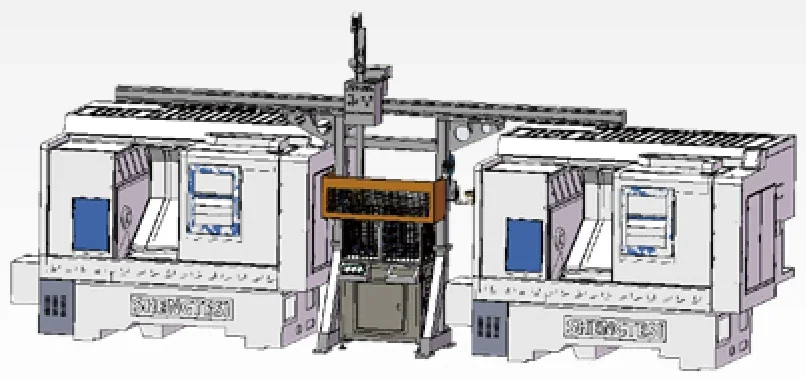
One Robot, Two Machines
Two machines served by one unit. Cost per machine is clearly lower than two single-machine cells.
One Robot, Two Machines, in short
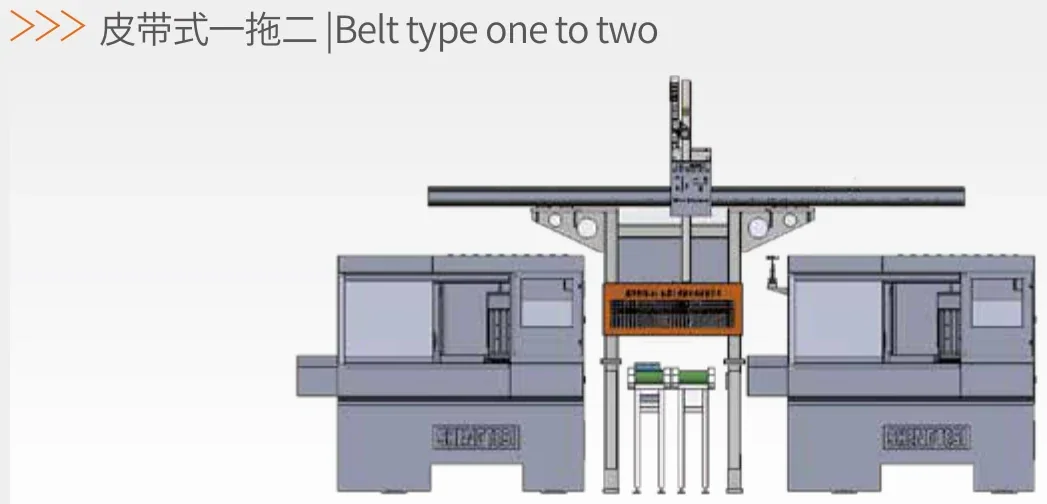
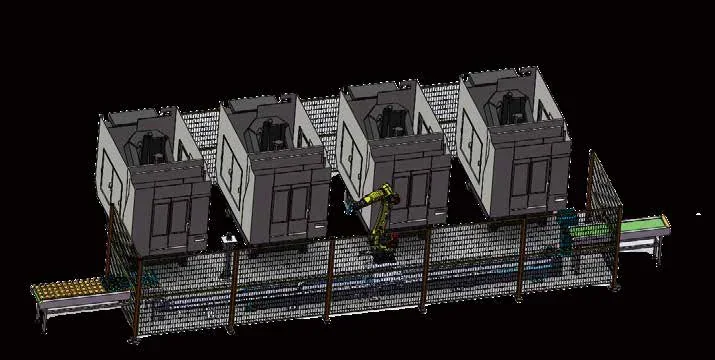
One gantry robot or one six-axis robot serves two machines. The gantry route uses a single-arm two-machine unit (S series) with an X-axis effective travel of up to 6 m and an end-of-arm payload of ≤0.5 / ≤2 / ≤5 KG in three steps; the robot route places one six-axis robot centrally and feeds both machines from storage and locating fixtures. Cost per machine is usually lower than two single-machine cells because the loading unit and the feeding system are shared. The two machines can run two operations in sequence (one roughing, one finishing) or the same operation in parallel for higher output.
Scope and typical configuration
Where it fits
Two machines, the same model or different models, arranged along one line with a moderate distance between them, with workpieces inside the same compatibility range.
Gantry route
A single-arm two-machine gantry (S series) with an X-axis effective travel of up to 6 m; end-of-arm payload in three steps: ≤0.5 / ≤2 / ≤5 KG.
Robot route
One six-axis robot placed centrally, feeding both machines through the storage magazine and the locating fixtures.
Two typical ways to use it
Two operations in sequence (one machine roughing, one finishing) or two machines running the same operation in parallel to raise output.
What the pairing has to get right
The automatic door and clamp signals of the two machines are handled separately, and the feeding buffer has to cover the round trip of the robot, so that one machine is not waiting while the other stands idle.
Solution in pictures
Frequently asked questions
Is one unit for two machines always cheaper than two single-machine systems?
Cost per machine is usually lower, because the loading unit and the feeding system are shared. The actual difference depends on the distance between the two machines and on how compatible the workpieces are.
Can two different machine models be served by one unit?
Yes, but the clamping and the signal exchange have to be designed separately for each machine, so the custom engineering is greater.
Will the two machines hold each other up?
Waiting is possible, and it depends on whether the machining times of the two machines match. Cycle matching is calculated at proposal stage; the feeding buffer is adjusted, or another configuration chosen, where the match is poor.
Related business lines and solutions
This configuration is usually used together with the following business lines.
Send the machine brand/model, part drawing or photo, blank and finished-part handling, single or multi-machine layout, target cycle and acceptance requirements.
Request an assessment Call +86 150 5020 2625